
Mugwort. Artemisia in Australia: Identification, Distribution, History and Traditional Uses
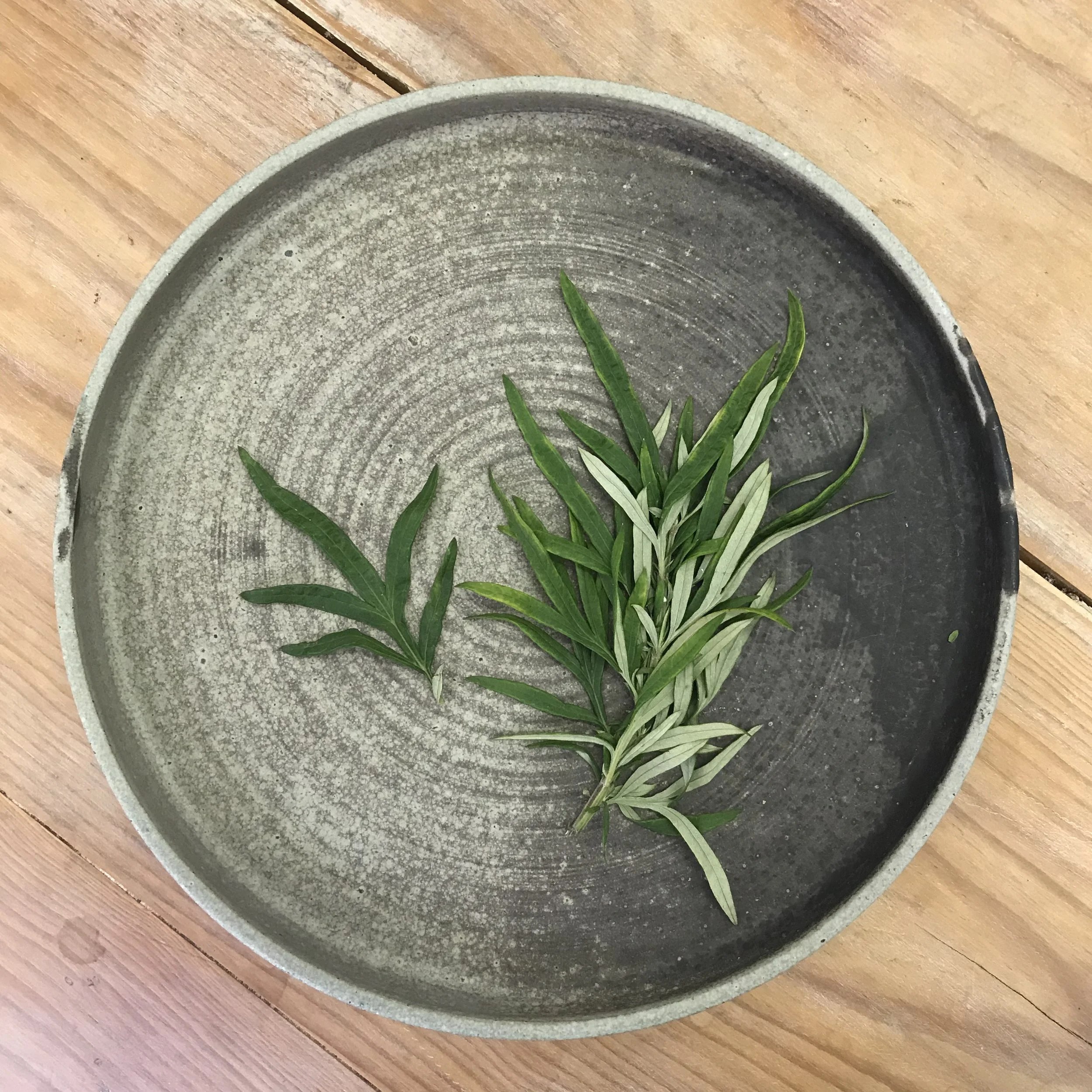
I remember the exact moment that I started to call mugwort “my sister”. It came naturally, as a ’matter-of-fact’ statement that whispered through my lips one morning. I was in Biella, Italy, back in 2009, walking back from the train station. I had been visiting family a one hour train ride away, and was on my way back to my accommodation. At the time I was being hosted by the Citta dell’Arte- Fondazione Pistoletto, as part of an art scholarship.
I walked past an abandoned farmhouse and noticed that most of the yard between the house and the barn was covered in a carpet of mugwort. My sister.
Why such a close genetic bond? Because it just felt right. I’ve known mugwort since forever. Its distinct scent has always been around me. Mugwort thrives wherever there is human disruption. So it’s likely it’s smell is familiar to you too.
In Australia we have several naturalised species of Artemisia, a fascinating genus of aromatic plants belonging to the daisy family (Asteraceae). Commonly known as mugworts or wormwoods. These plants have a long history of culinary, medicinal, ritual and folklore use across Europe and Asia.
Artemisia vulgaris: the true mugwort, the one of witch’s fame, found naturalised in the South East but most likely a mis-identification of the far more common and similar-looking A. verlotiorum
Artemisia verlotiorum: aka Chinese mugwort, the most widespread variety, popping up in the water-logged ruins of buildings and amongst discarded building material. It is a very tenacious plant that persist in the severely damaged ecologies of suburban Australia.
Artemisia arboresces: A bushy, perennial, silvery mugwort. Sometimes found as a garden escape now naturalised in parts of Australia.
Artemisia absinthium: annual, silvery, strongly scented. Occasionally found as a garden escape. The (in)famous source of absinth liqueur.
Artemisia deracunculus: Tarragon, much loved herb in french cusine and traditionally used in Central Asia and middle eastern dishes. Occasionally found as a garden escape.
And three more species of lesser occurrence but just as impressive: A. pontica, A. frigida and A. annua.
Among the wild species encountered in Australia, common mugwort (Artemisia vulgaris) and Chinese mugwort (Artemisia verlotiorum) are particularly interesting, and the most widespread. Both are aromatic, rhizomatous perennials, but they differ in their appearance, distribution and botanical characteristics. Correct identification is essential before considering either for foraging, craft, medicine or other traditional use.
Identification and Australian distribution
Chinese mugwort (Artemisia verlotiorum)
This is arguably the most relevant wild mugwort for Australian foragers. It grows as an erect perennial, commonly reaching 1–2 metres, with creeping underground rhizomes. Its deeply divided leaves are dark green above and covered in whitish hairs beneath. The plant produces small yellowish to reddish-brown flower heads in branched clusters during summer and autumn.
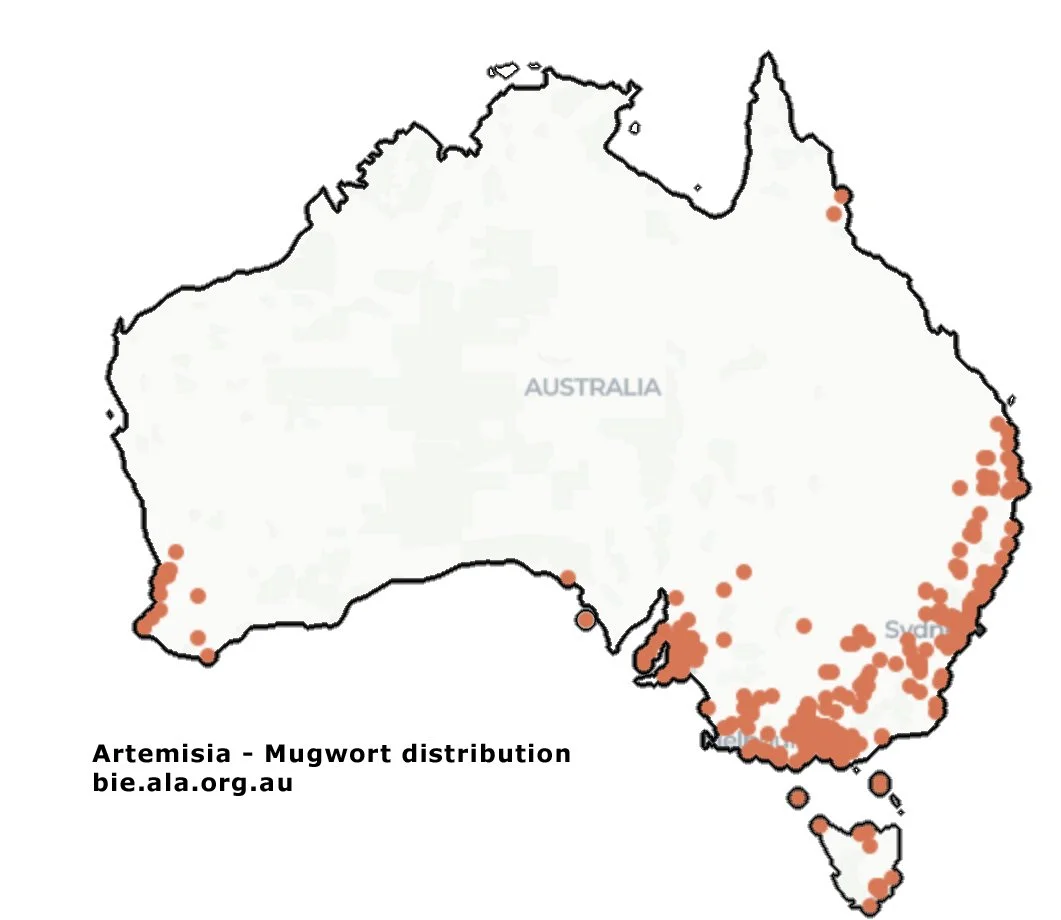
It is native to south-western China and is naturalised in south-eastern Queensland, New South Wales, the ACT and Victoria. In NSW, it occurs around Sydney and west towards Bathurst, particularly in moist disturbed ground, creek banks, roadsides and forest margins. It can form dense colonies through underground rhizomes and is considered an environmental weed in parts of Australia.
Common mugwort (Artemisia vulgaris)
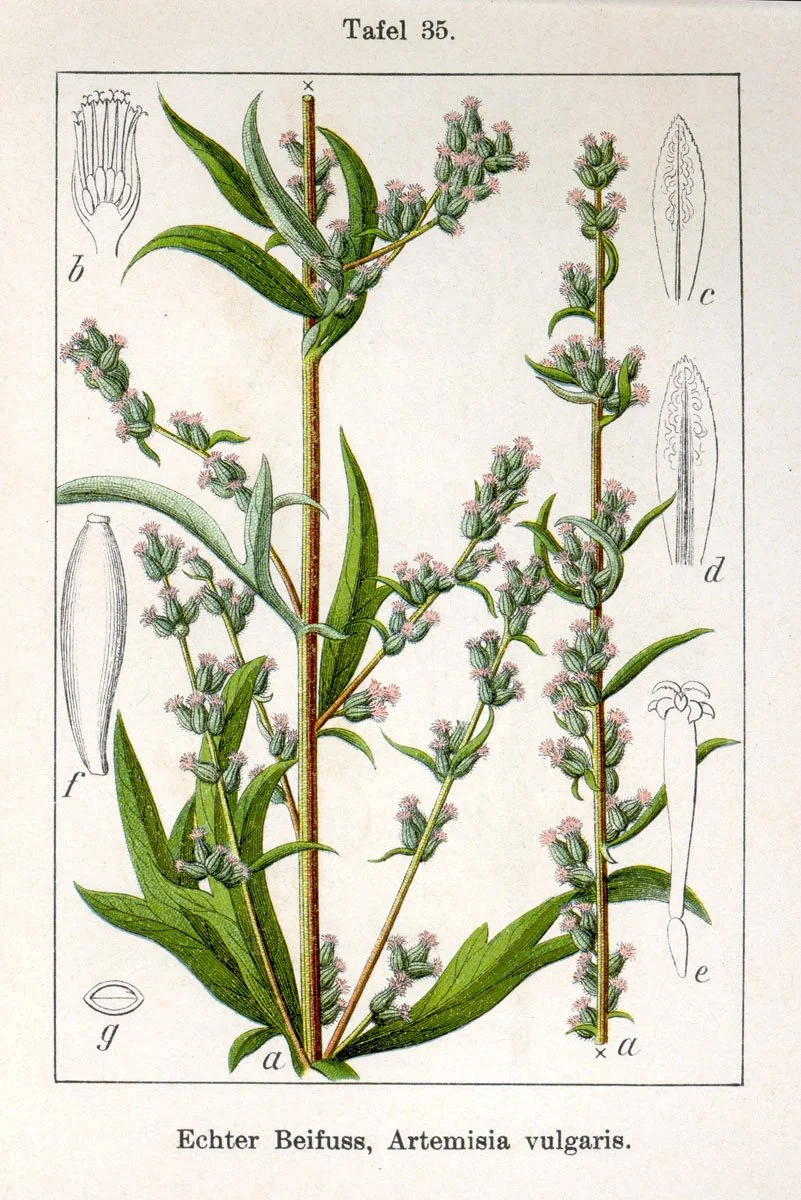
The famous European and Asian mugwort has reddish or purplish stems, deeply lobed leaves and a characteristic silvery-white, hairy underside. It can grow to approximately 2 metres. Its flower heads are small, inconspicuous and arranged in branched terminal clusters.
Although widely known in herbal traditions, A. vulgaris is not as reliably established in Australia as Chinese mugwort. Australian botanical records include historical specimens, but its persistent naturalisation is uncertain. It should not automatically be assumed to be the species encountered in an Australian creek-side colony.
How to distinguish the species
Character
Growth
Stem
Lower leaves
Leaf underside
Upper leaves\
Habitat
Australian status
A. verlotiorum
Rhizomatous colonies
Ribbed, hairy when young
Deeply divided
Whitish, hairy
Often nearly entire
Moist disturbed sites
Naturalised
A. vulgaris
More tufted growth
Often reddish-purple
Deeply lobed
White, densely hairy
Usually lobed
Roadsides, waste ground and grasslands
Uncertain, uncommon
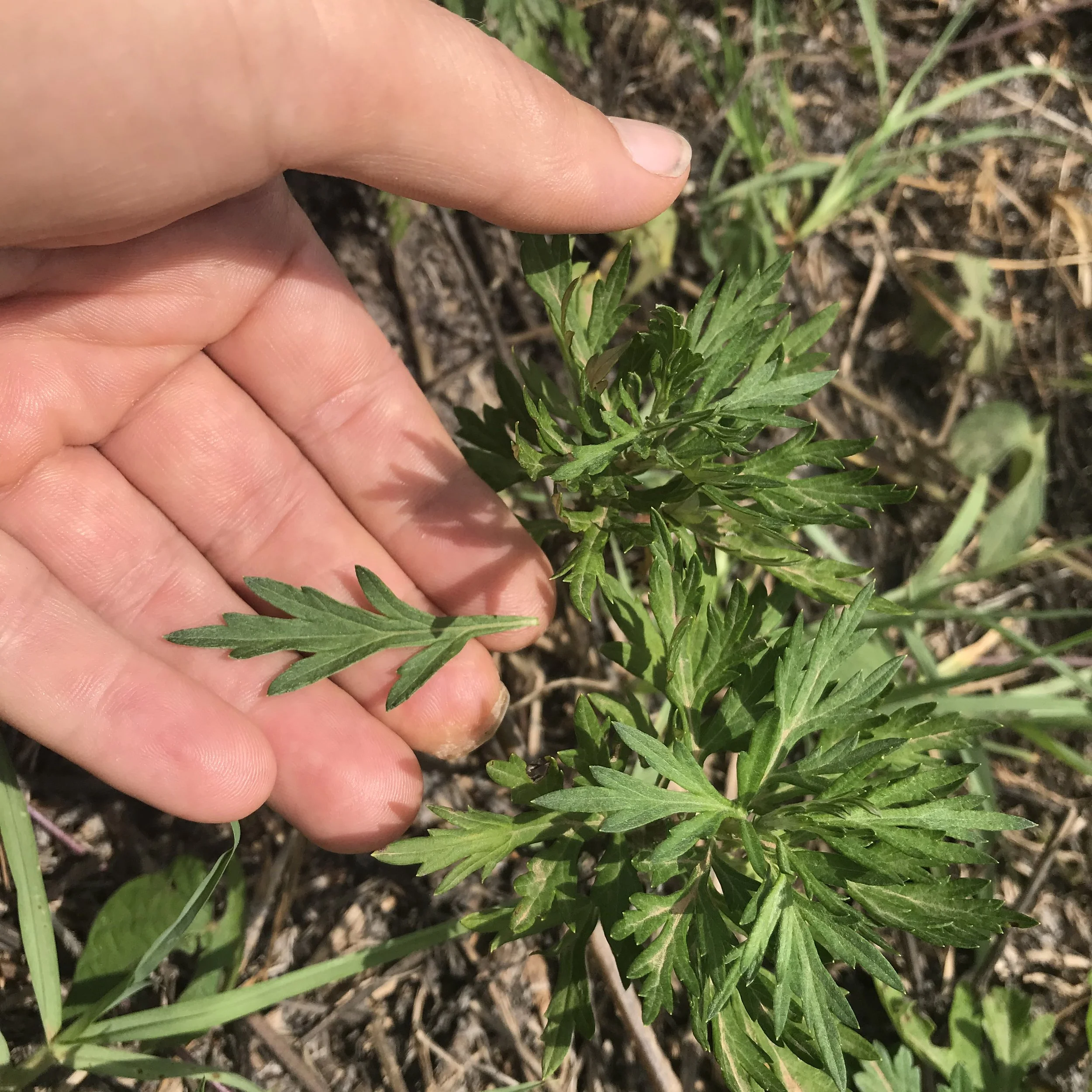
A, verlotiorum leaves
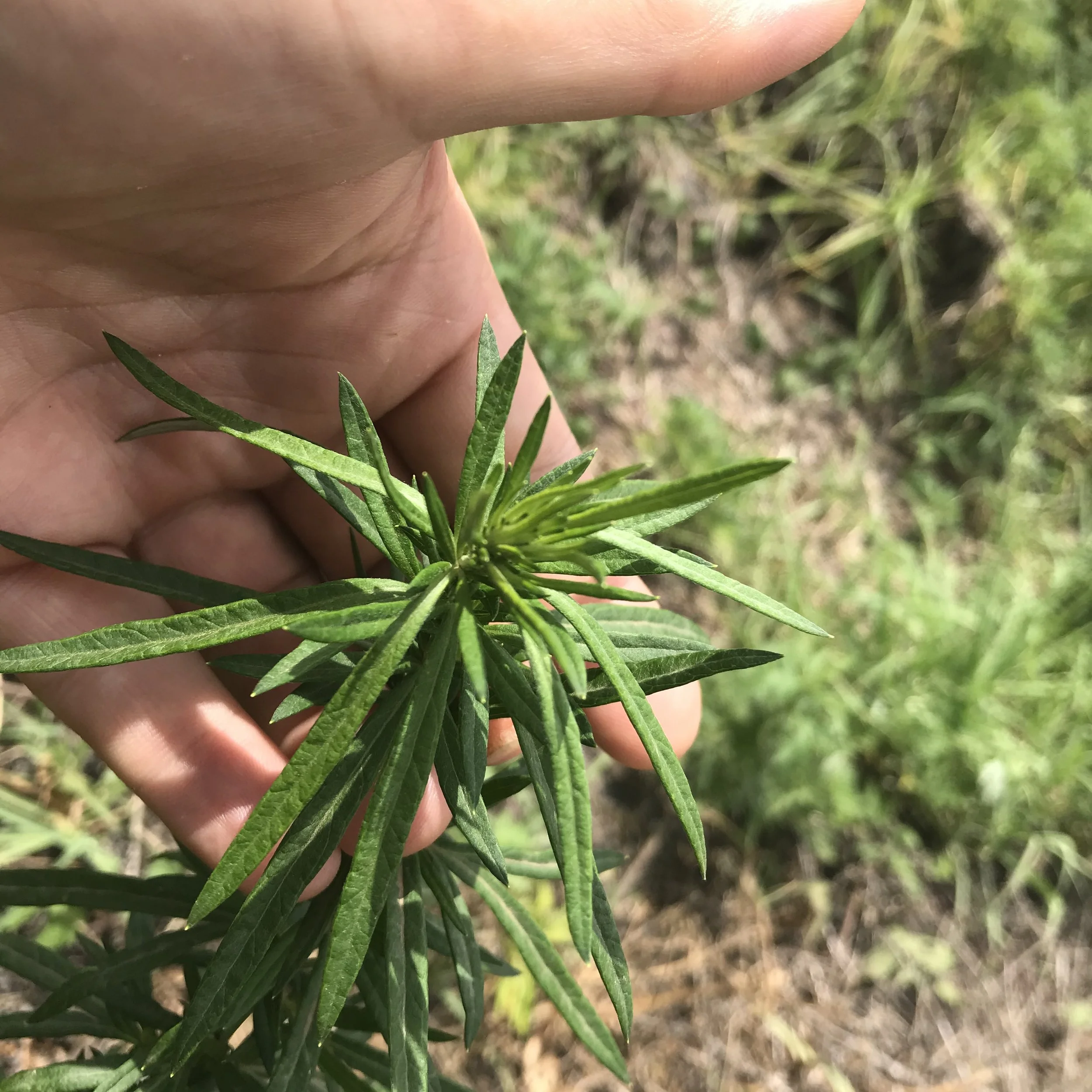
A, verlotiorum leaves diveristy
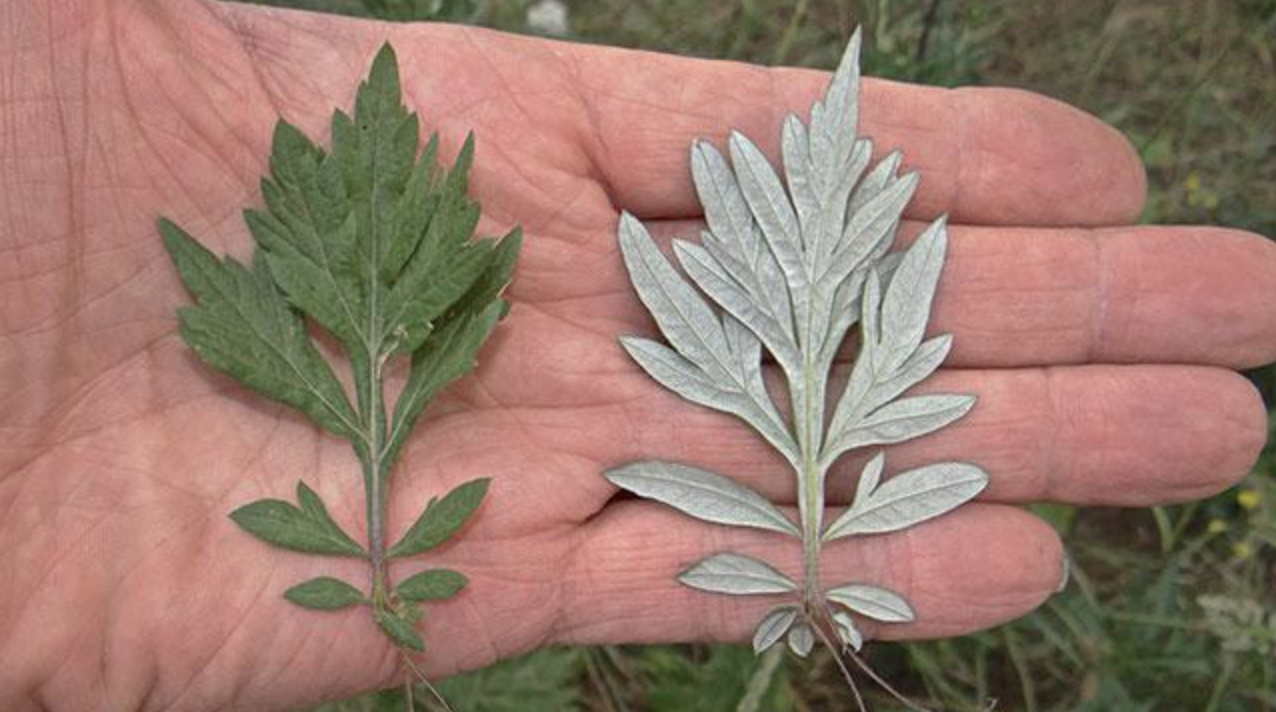
A, vulgaris leaves with silver underleaf
An important identification warning: Leaf colour and aroma alone are not sufficient for identification. Other Australian Artemisia species, including wormwoods, may look similar. The botanical distinctions require examining leaf arrangement, flower heads, receptacles and, especially, underground growth. The presence of rhizomes is a useful clue for A. verlotiorum. A reliable botanical identification should precede eating any wild plant.
Foraging and culinary traditions
Mugwort has a strong, penetrating fragrance, often described as herbal, bitter, resinous and slightly reminiscent of sage. Its young leaves are traditionally used in small quantities as a seasoning rather than a principal vegetable.
European cooking historically incorporated mugwort into fatty meat dishes, particularly goose and pork, where its bitterness helped balance rich flavours. In East Asian traditions, mugwort is used in rice cakes, dumplings and seasonal preparations.
Three simple ways to experiment with mugwort include:
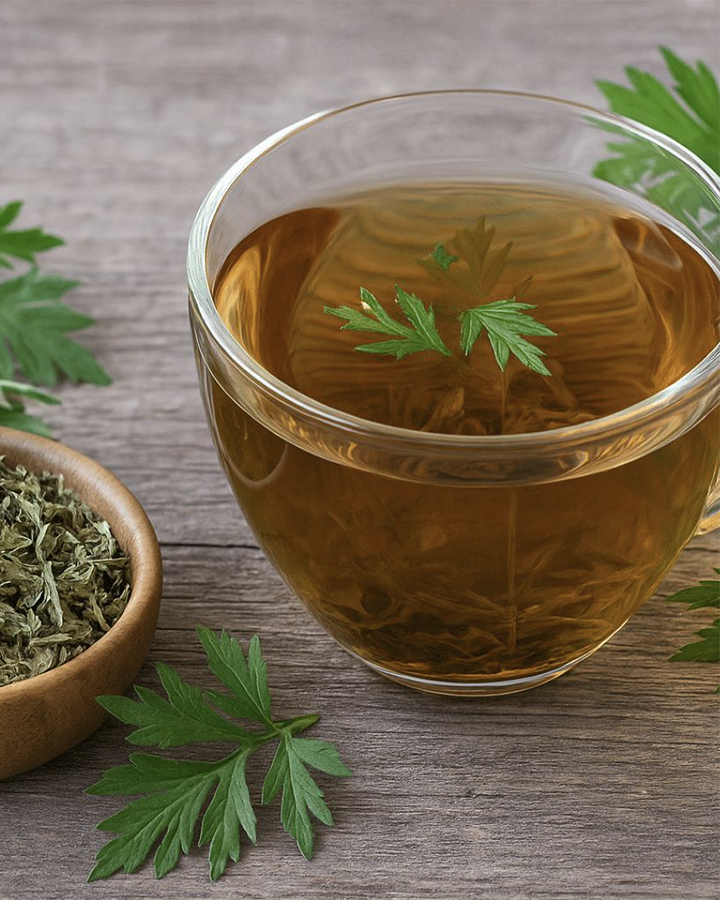
1. Mugwort herbal infusion -
Add a small culinary pinch of fresh leaves to a cup of hot water. Steep briefly, strain and serve as a tea. Its flavour is strong and bitter, so use sparingly.
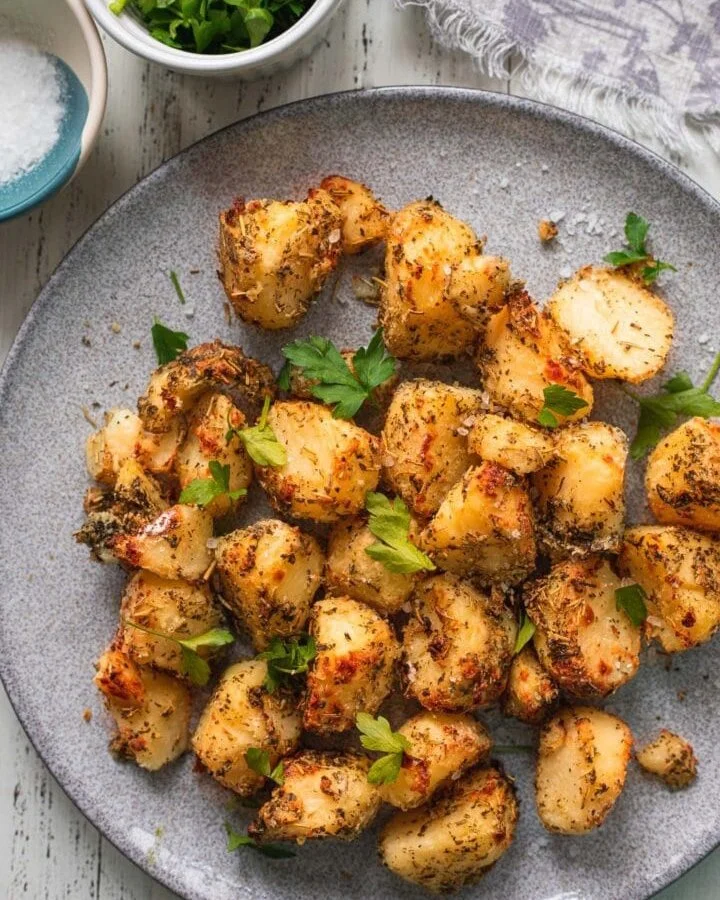
2. Mugwort roasted potatoes -
Finely chop a little young leaf and combine with olive oil, garlic, salt and potatoes. Roast until golden. The aromatic bitterness complements earthy vegetables.
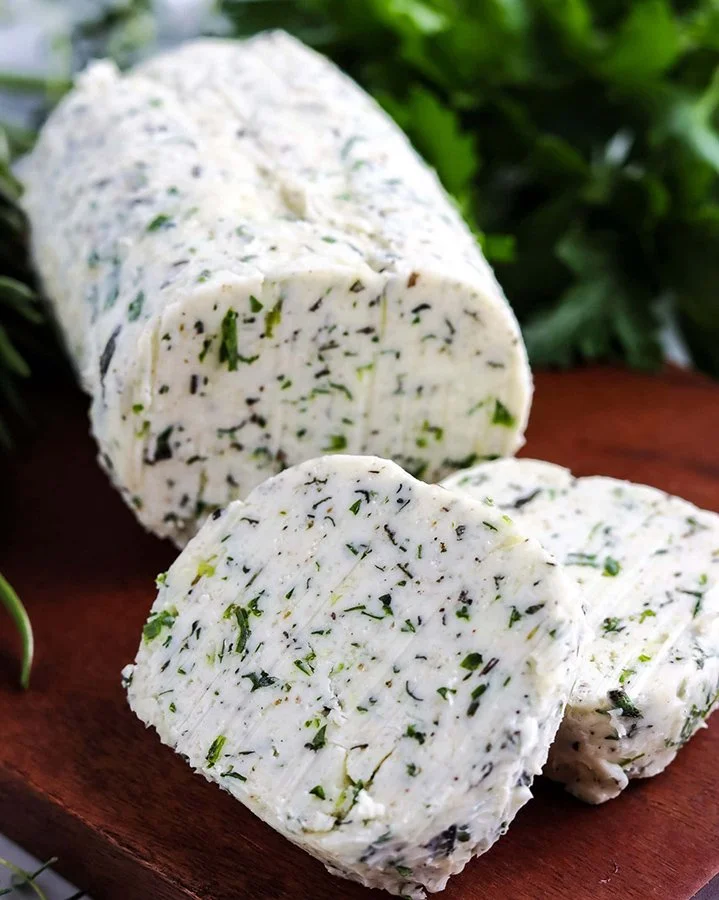
3. Mugwort herb butter - Mix a very small amount of finely chopped young leaves into softened butter with lemon zest and salt. Serve with mushrooms, vegetables or bread.
Medicinal uses and herbal traditions
Historically, A. vulgaris was regarded as one of Europe's important medicinal plants. It was called mater herbarum, meaning “mother of herbs”, and used in traditional herbal medicine for digestive complaints, menstrual discomfort, fatigue and external preparations for aching limbs. In East Asian medicine, mugwort has a particularly important role in moxibustion, a traditional therapy in which dried mugwort material is burned near acupuncture points to provide heat. Specially prepared A. argyi is commonly used for this purpose; it should not be confused with Australian wild A. verlotiorum.
Modern scientific research has investigated various Artemisia compounds for antimicrobial, anti-inflammatory and antioxidant properties.
Safety: Avoid medicinal preparations and internal use during pregnancy or when trying to conceive. Australia's Therapeutic Goods Administration warns that medicines containing Artemisia ingredients may pose pregnancy risks. Essential oils and concentrated extracts should not be treated as equivalent to culinary herbs.
There is an old Scottish legend that tells how a mermaid of the Firth of Clyde, upon seeing the funeral of a young girl who had died of consumption, exclaimed:
“If they wad drink Nettles in March,
And eat Muggins [Mugwort] in May,
Sae mony braw maidens
Wad not go to clay.”
Folklore, mythology and magical traditions
Mugwort has an extraordinary place in European folklore. Its botanical name, Artemisia, is traditionally associated with Artemis, the Greek goddess of wilderness, hunting and childbirth, although the precise historical origin of the name is debated.
In medieval Europe, mugwort was considered a protective herb. Travellers reportedly placed it inside their shoes to prevent tiredness on long journeys. It was also associated with protection against evil spirits, witchcraft and unwanted influences.
During midsummer celebrations, particularly St John's Eve, mugwort was gathered into wreaths and hung above doors and stables. In some traditions, it was worn as a protective charm. Its associations with dreams and divination also made it a popular herb in European magical practices.
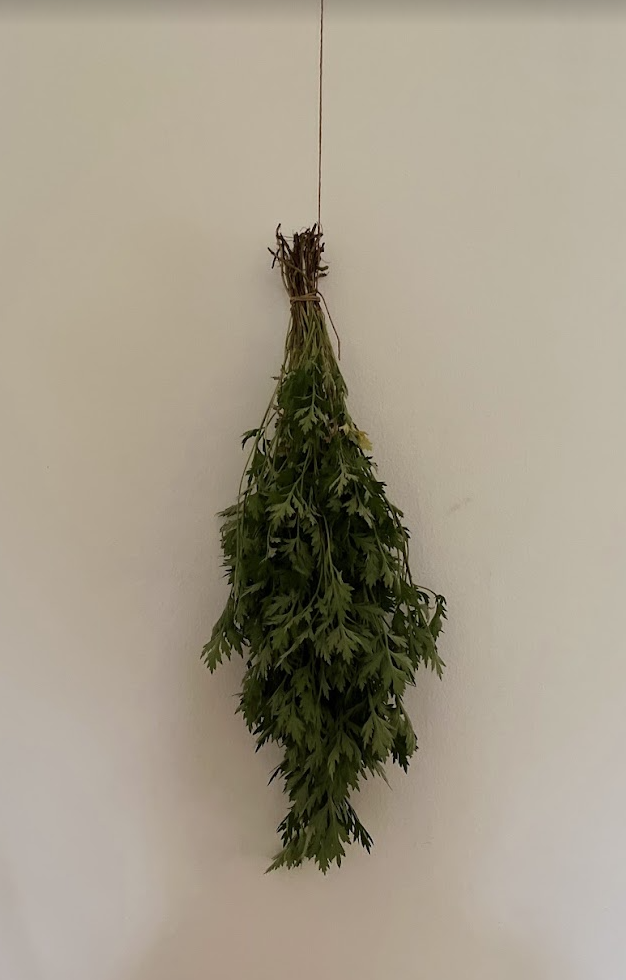
In contemporary Wiccan and other modern pagan practices, mugwort is sometimes associated with lunar symbolism, intuition, dreamwork, divination and spiritual protection. These are modern interpretations drawing on older European folklore, rather than evidence of a single unbroken ancient tradition. I personally use mugwort as a powerful smudging stick, an ancient smoke-cleansing practice used to clear negative energy and protect spaces.
Foraging responsibly in Australia
Wild mugwort offers an interesting connection between botanical knowledge, traditional food culture and herbal history. For Australian foragers, however, the distinction between A. verlotiorum and A. vulgaris is especially important.
Harvest only plants positively identified by their botanical characteristics, from uncontaminated locations away from roads, sprayed areas and polluted waterways as, unfortunately, oftentimes that is where you find these plants. Remember that A. verlotiorum can be an environmental weed, and avoid transporting its rhizomes or spreading it into new areas.
Its greatest value may be as a plant to observe, identify and understand: a reminder that the history of human relationships with wild herbs extends far beyond their use as food. Maybe even treat them as kin, give sister a nod as you would someone you’re connected with.
Sources and further reading
NSW Flora Online – Royal Botanic Gardens Sydney: Artemisia verlotiorum – botanical description and NSW distribution.
Weeds of Australia – Lucid Central: Chinese mugwort – naturalisation, habitats and weed status.
VicFlora – Royal Botanic Gardens Victoria: Artemisia verlotiorum – identification and Victorian distribution.
US National Center for Complementary and Integrative Health: Mugwort: Usefulness and Safety – medicinal evidence and safety.
Australian Therapeutic Goods Administration: Listed medicines containing Artemisia species – pregnancy safety advisory.
Horniman Museum: Plants, food and folklore – European traditional uses and folklore.
Huang et al. (2017): Moxibustion in Early Chinese Medicine – historical background of moxibustion.
The Herbal Academny: How to use Mugwort - Excellent blog+ recipes
Gutenberg project: Plant Lore, Legends and Lyrics - excellent collection of folk tales
Botanica.com: Mugwort