
Lilly pilly, riberry and close relatives
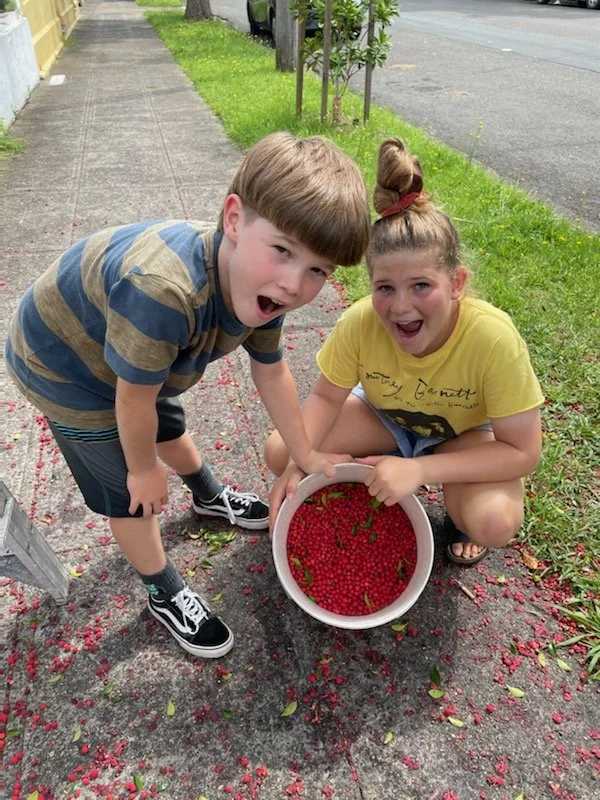
Just around the corner is riberry season, one of the most loved lilly pilly varieties. In our household, lilly pilly berries are a favourite wild edible – we keep bowls of the fresh, sharp, clove-flavoured treats on hand as a snack when they are in season. Collected by the bucketload, the fruit that we don’t devour straight away is pickled – usually with fresh ginger – or turned into jams, pastes, tarts, syrups or sauces. There are several varieties abundant on the eastern Australia coast, and foraging for these delicious berries has become something we look forward to every year. It is now our holiday tradition. Whenever we go to the city to visit family for xmas, we take extra time to check on this seasonal treat.
There are about sixty to eighty Syzygium species, found from Victoria all the way to the Northern Territory; most species are native to tropical regions. Four types of lilly pilly in particular – Syzygium luehmannii, Syzygium australe, Syzygium paniculatum and Syzygium smithii – are extensively planted in urban settings, often as living screens, by councils and by home gardeners. All lilly pillies produce edible fruit, but the berries of many species are quite sour.
Identification
Lilly pillies are evergreen trees, with a smooth bark. In their natural habitat, some species can grow up to 30 metres tall, while only reaching 8–10 metres in a cultivated or street setting.
All species have small oval leaves with a pointed end, and produce a copious amount of flowers prior to their individual fruiting seasons. The best way to identify individual species is when they are in fruit, as the berry of each type of lilly pilly is unique. All fruits contain a single round seed.
The following four species are widely planted.
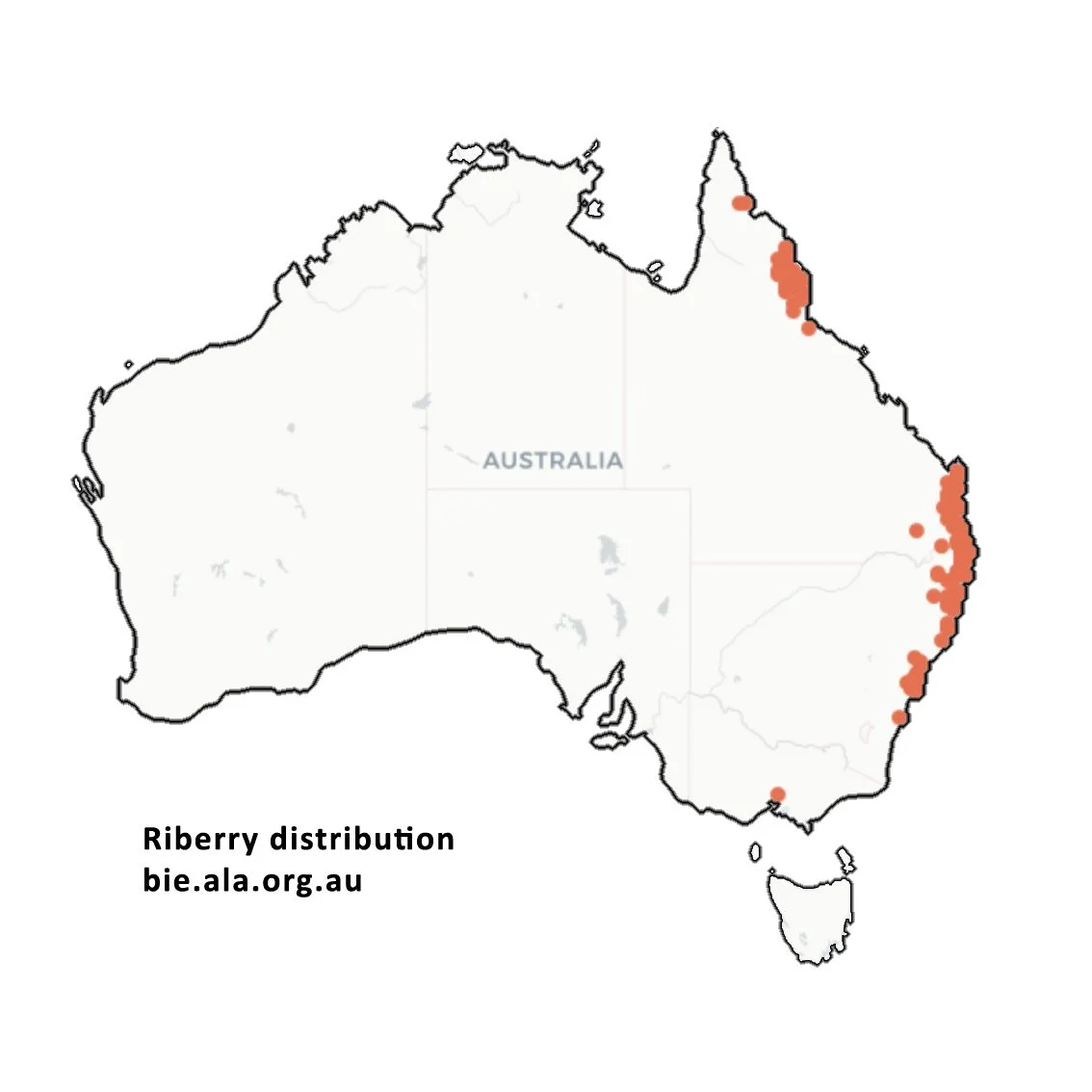
Riberry (Syzygium luehmannii)
Endemic to northern New South Wales/south-eastern Queensland, this tree is extensively planted as a garden hedge. It can take severe pruning, and the continual flush of foliage makes it a preferred tree for use in parks and new housing developments. The flowers are white to cream in colour, and aromatic. The pear-shaped berries are light pink to dull red and up to 15 millimetres in length. The fruits have a short season, from around November to December, and present themselves in sizeable clusters of up to a hundred berries.
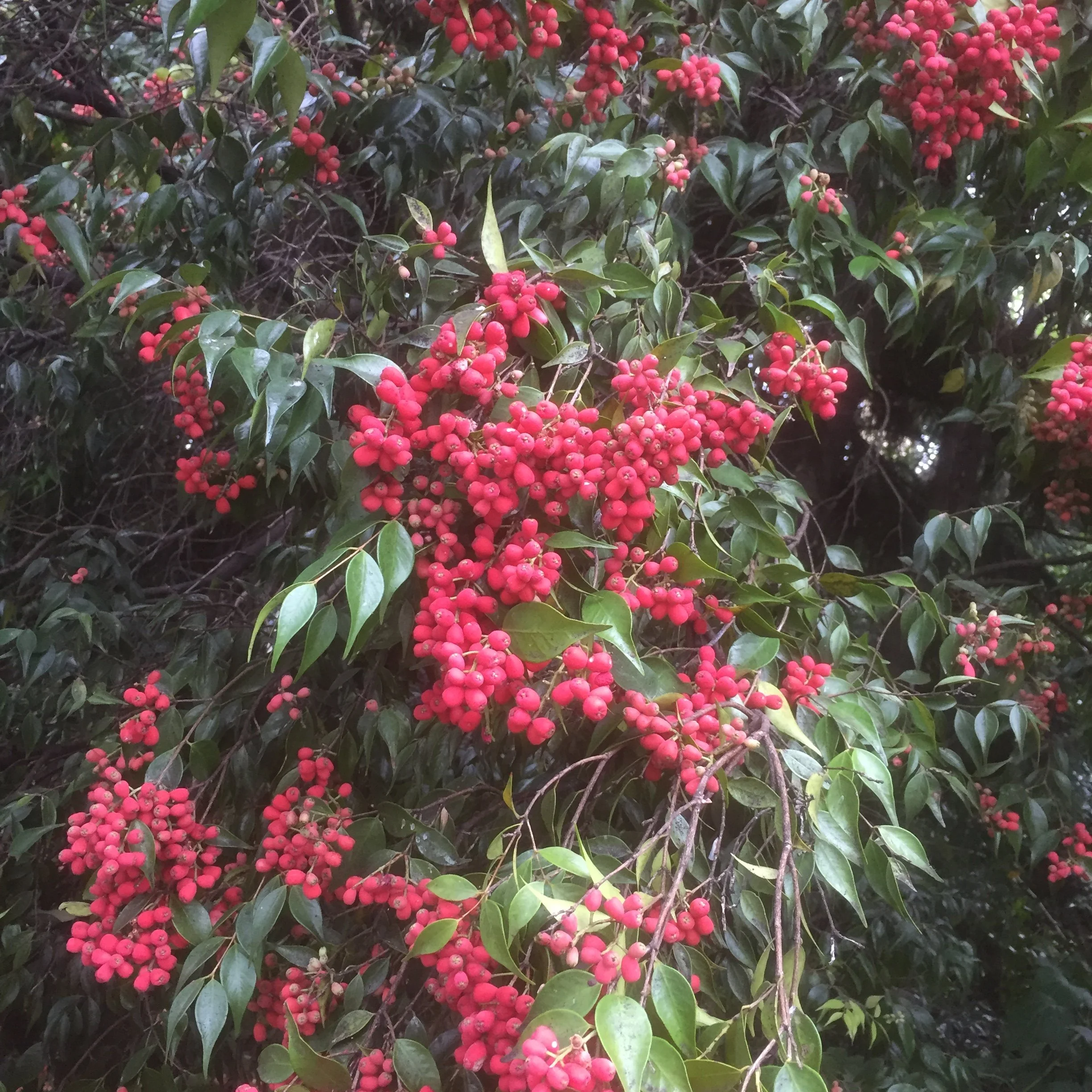
Riberry tree in fruit
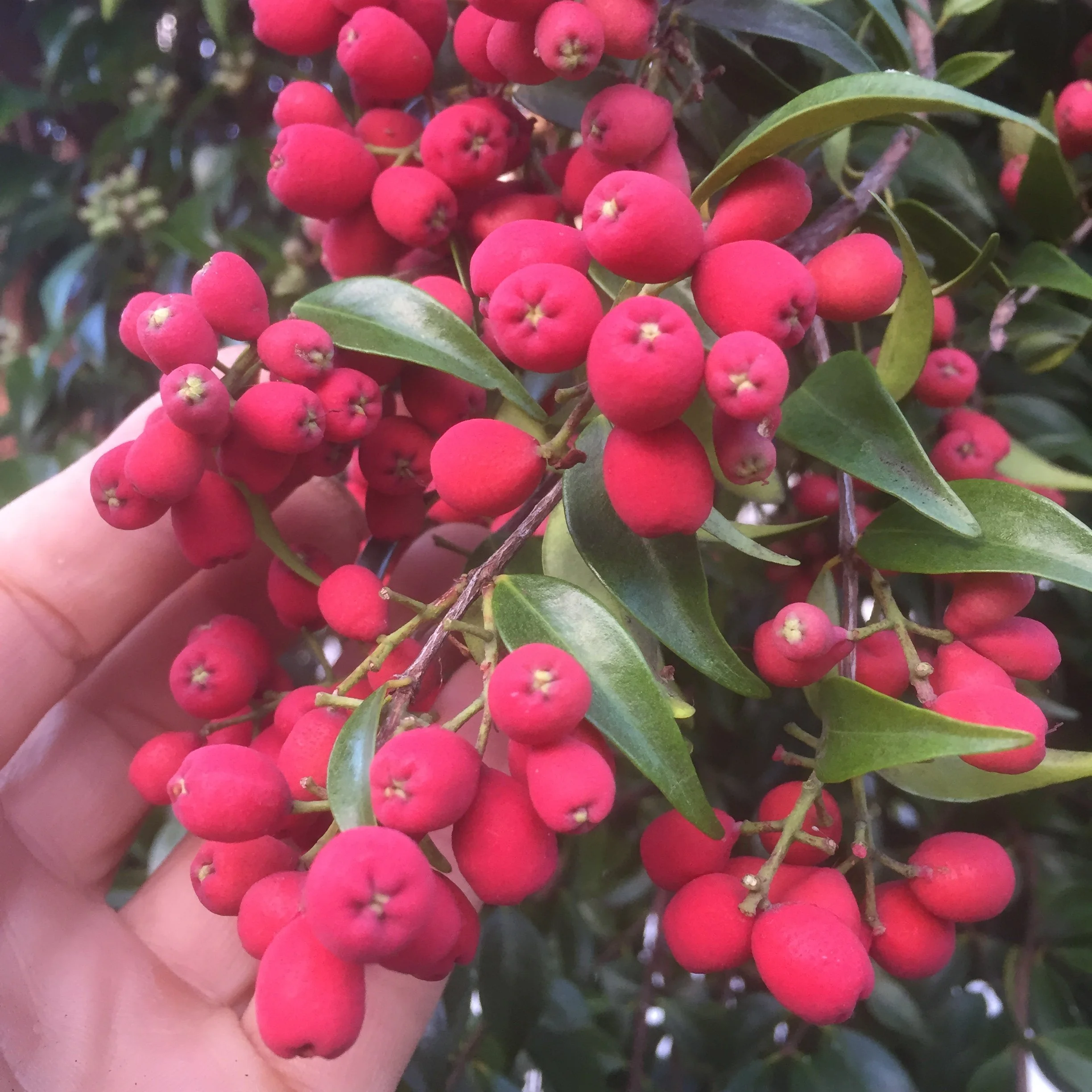
Cluster of fruits
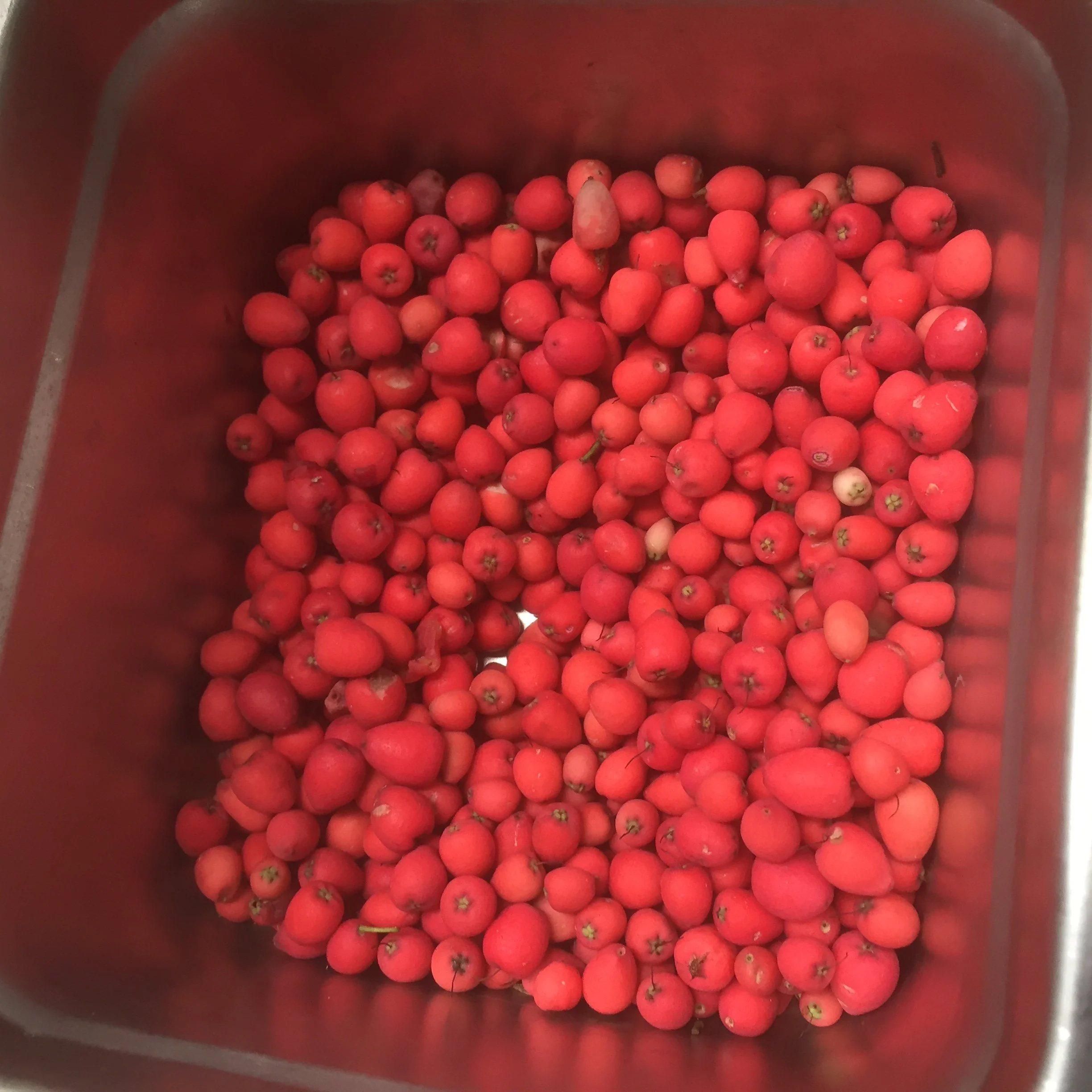
Clean fruits
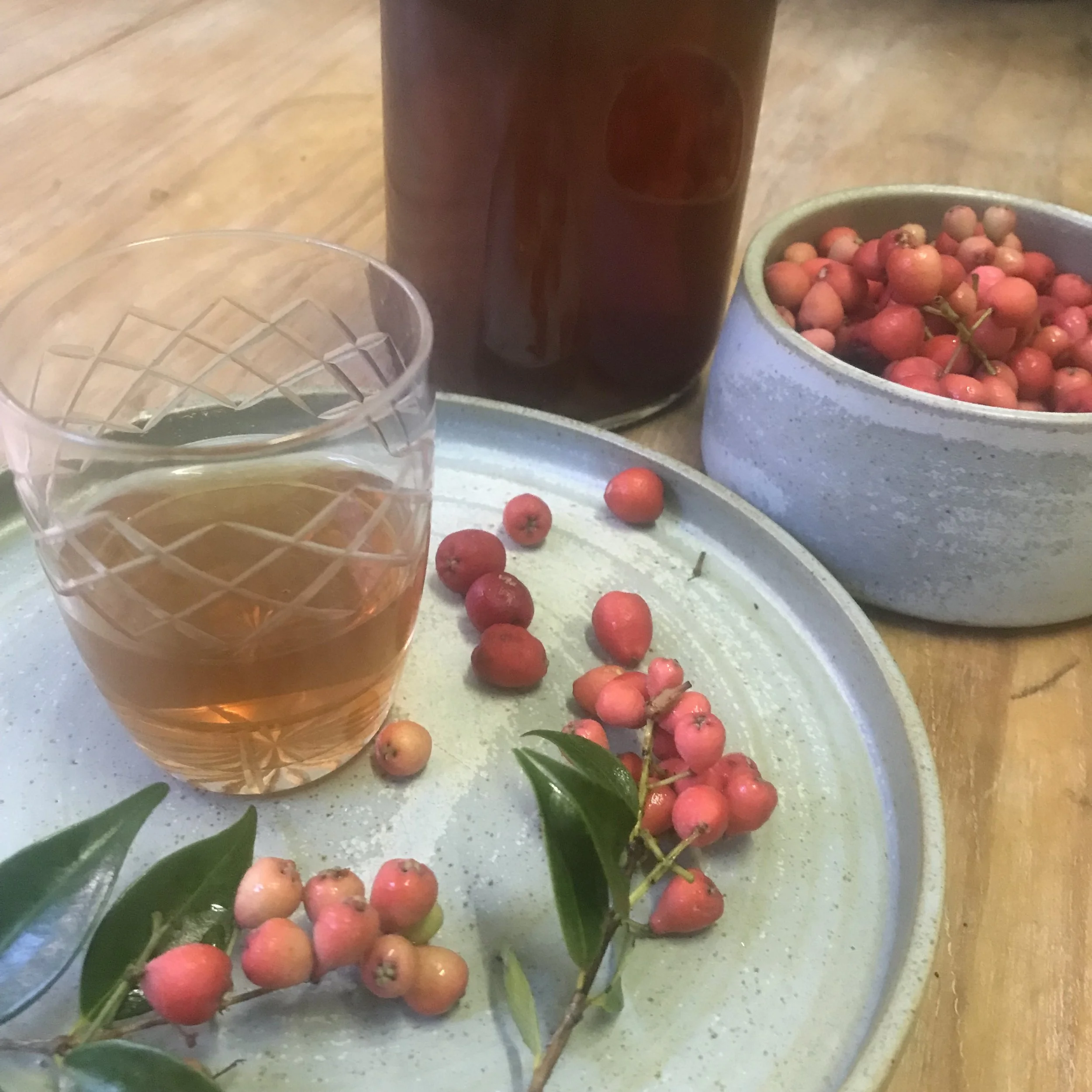
Riberry syrup
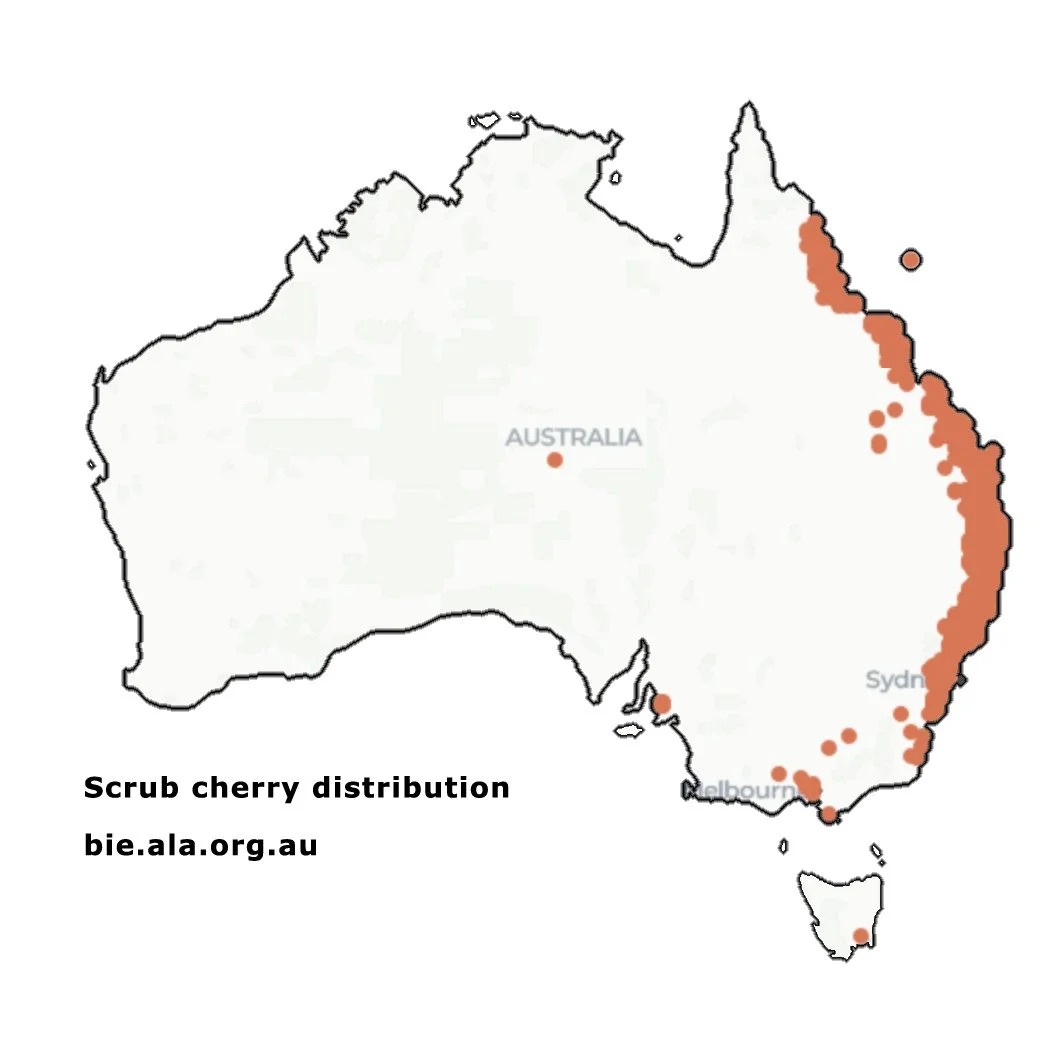
Scrub cherry (Syzygium australe)
The native range of this lilly pilly extends from Batemans Bay, New South Wales, all the way along the coast to Mackay in Queensland. The pear-shaped fruit is pink to pale red and up to 25 millimetres long. This tree is extensively planted in private and public gardens for its attractive foliage, pink-red when young and turning a deep green when older. It has been hybridised in a number of dwarf cultivars that are available commercially; their size makes them easy to prune into various shapes. Scrub cherry flowers in summer, with showy displays of white, fluffy flowers. The fruits develop from March to May.
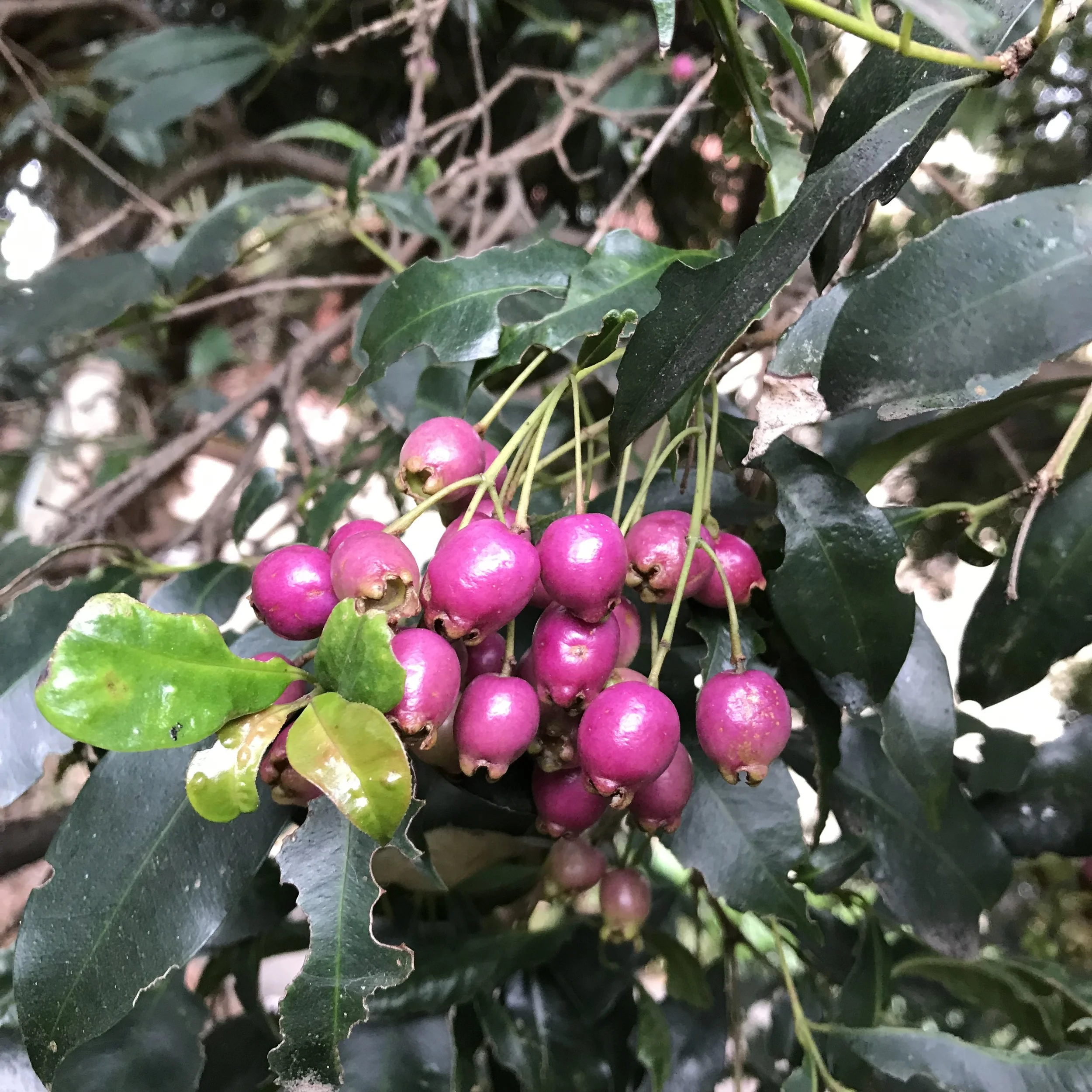
Scrub cherries on tree
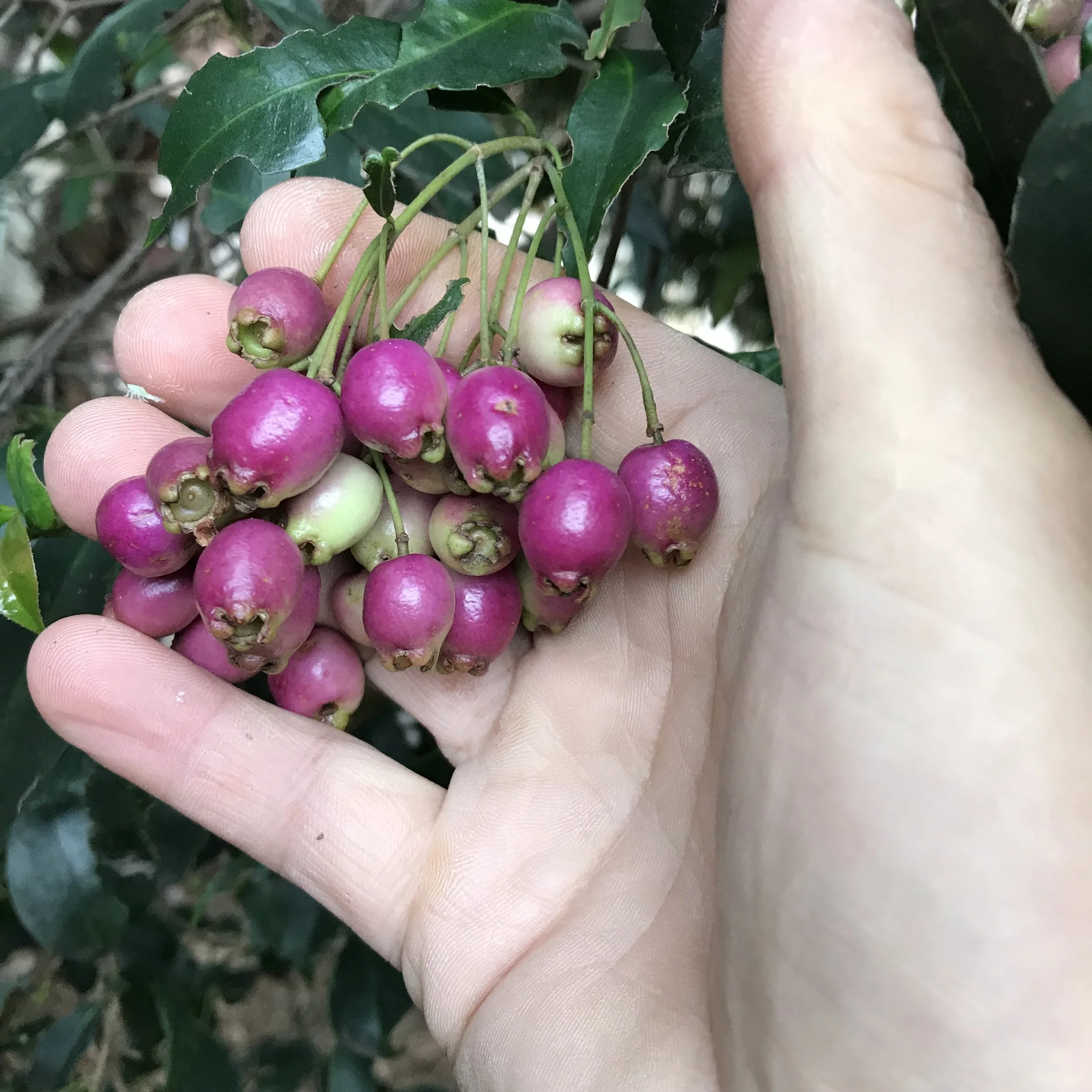
Cluster of fruits
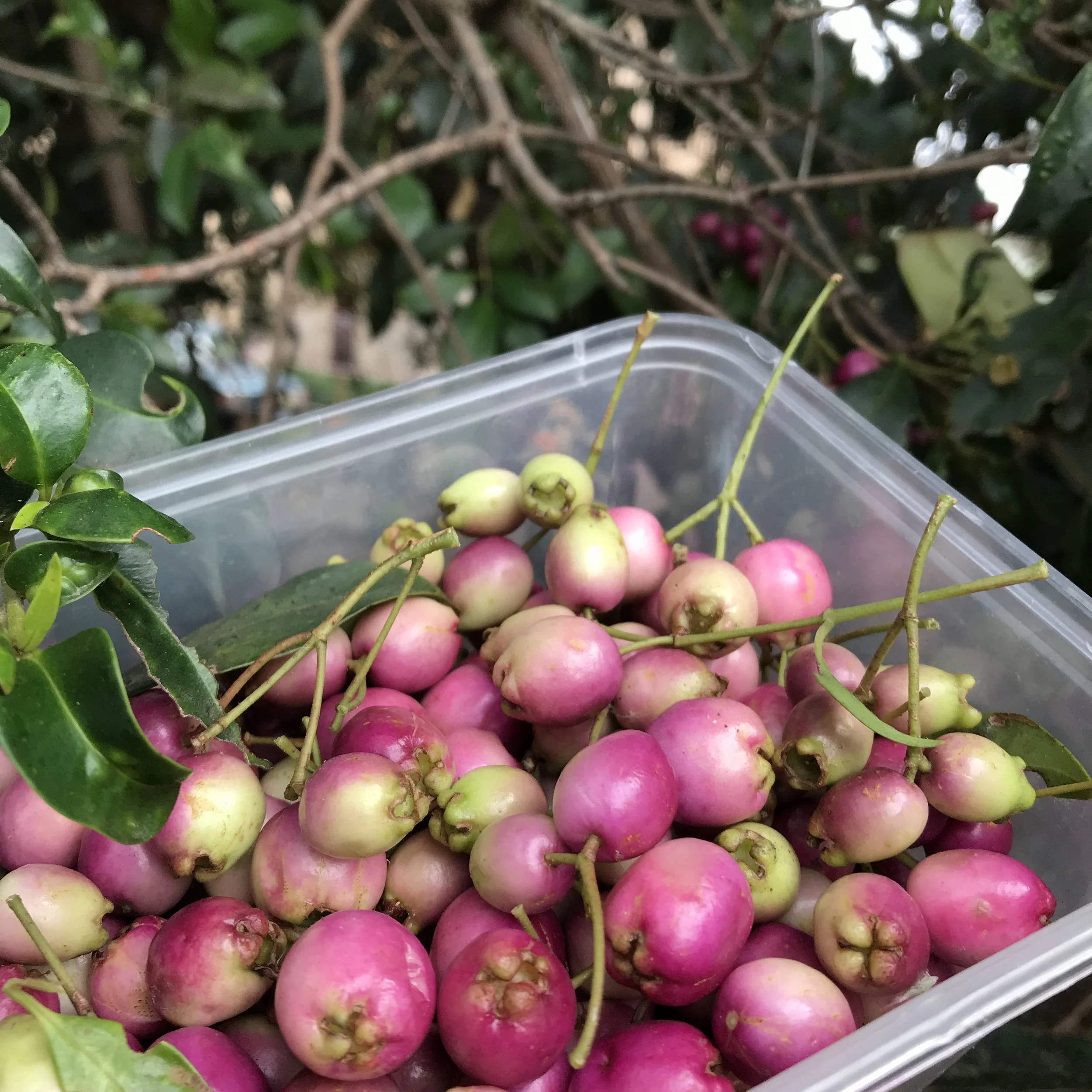
Harvesting scrub cherries
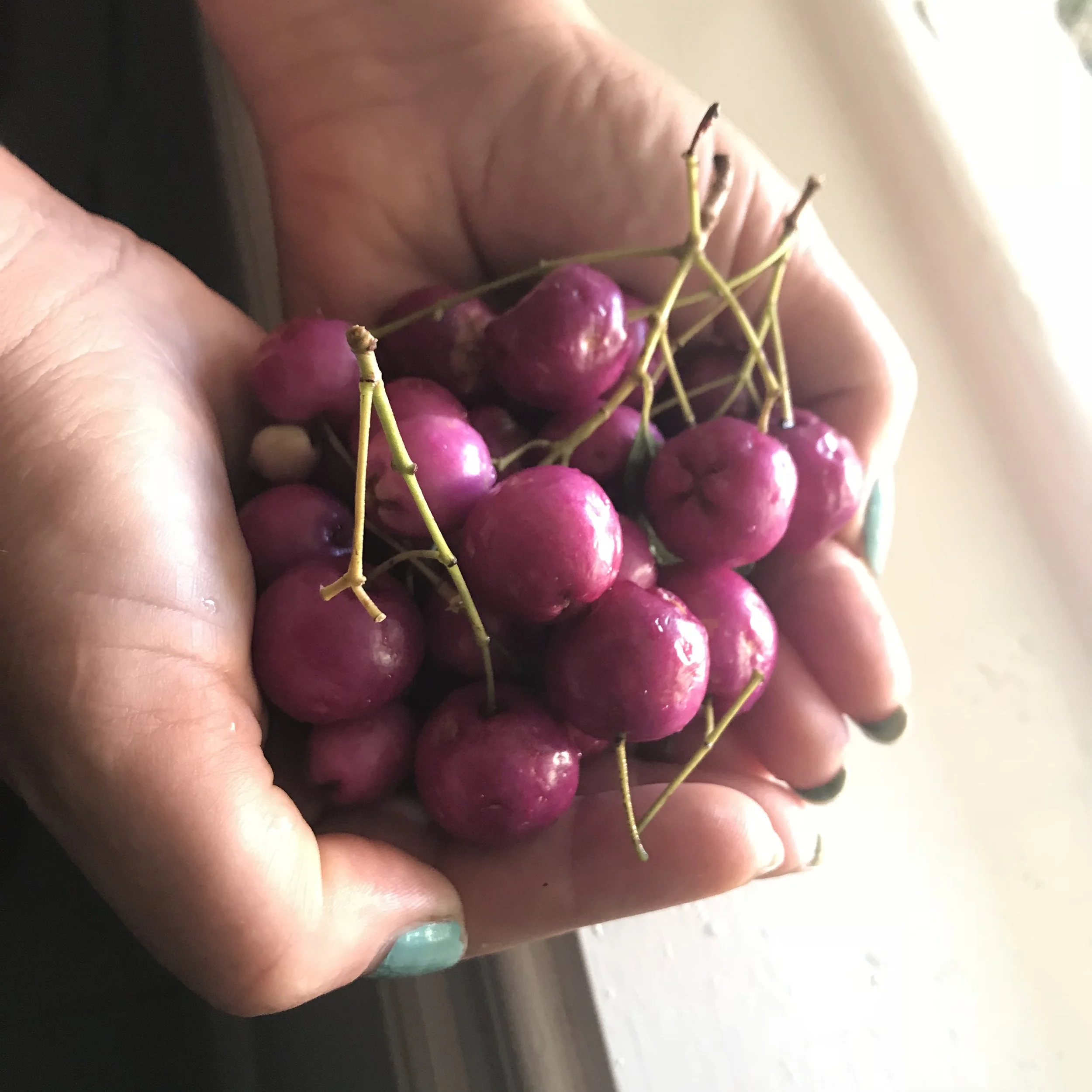
a handful of them
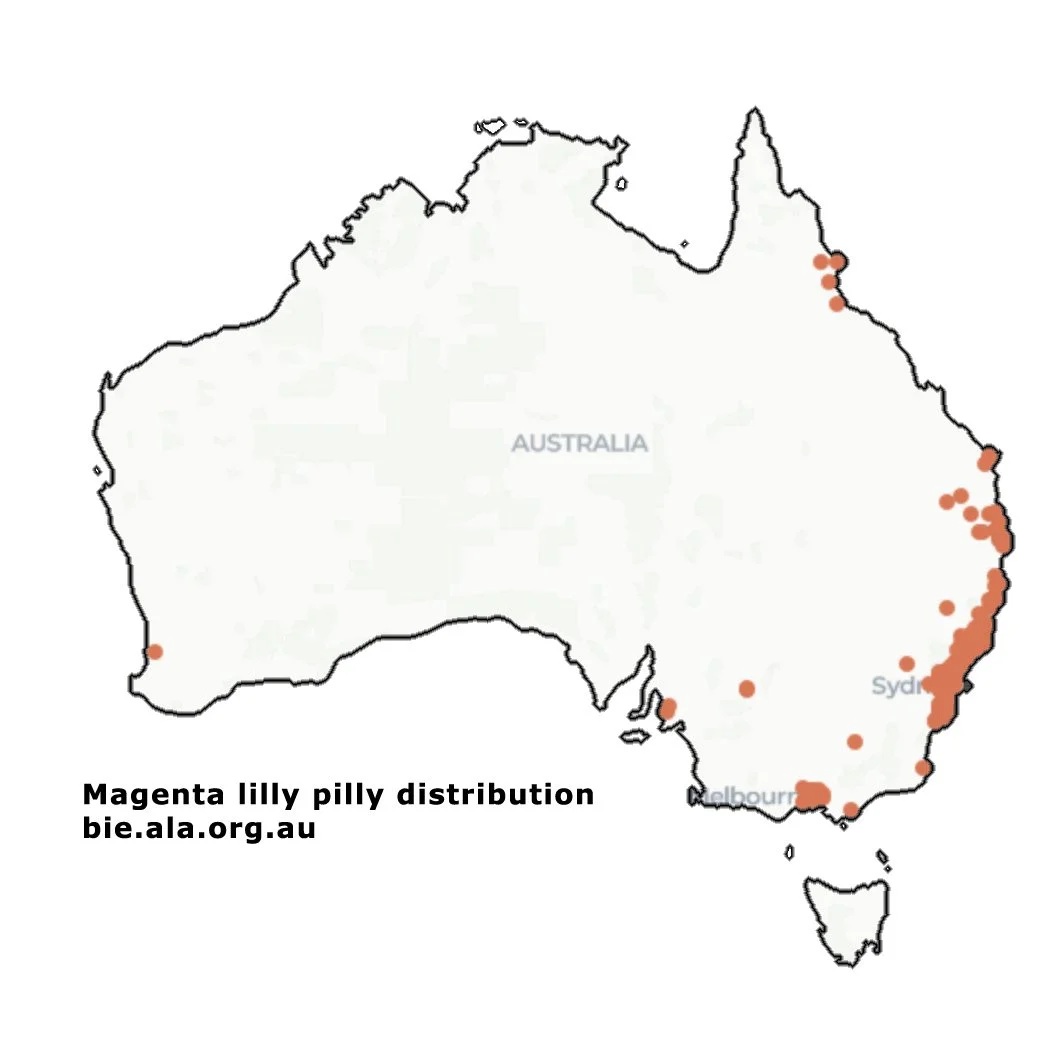
Magenta lilly pilly (Syzygium paniculatum)
This tree is quite similar to the scrub cherry, and the two are often confused. It has a smaller natural range (coastal New South Wales), but is planted in gardens and streets all over Australia. The fruit is pink to pale red, 2 centimetres long, and has a sharp flavour with a crunchy texture, similar to green apples – it is excellent in jams. This lilly pilly flowers in summer, and provides plenty of fruit in the autumn months. PLease note that S. paniculatum is considered a vulnerable species in its natural range. Please only engage with urban street plantings.
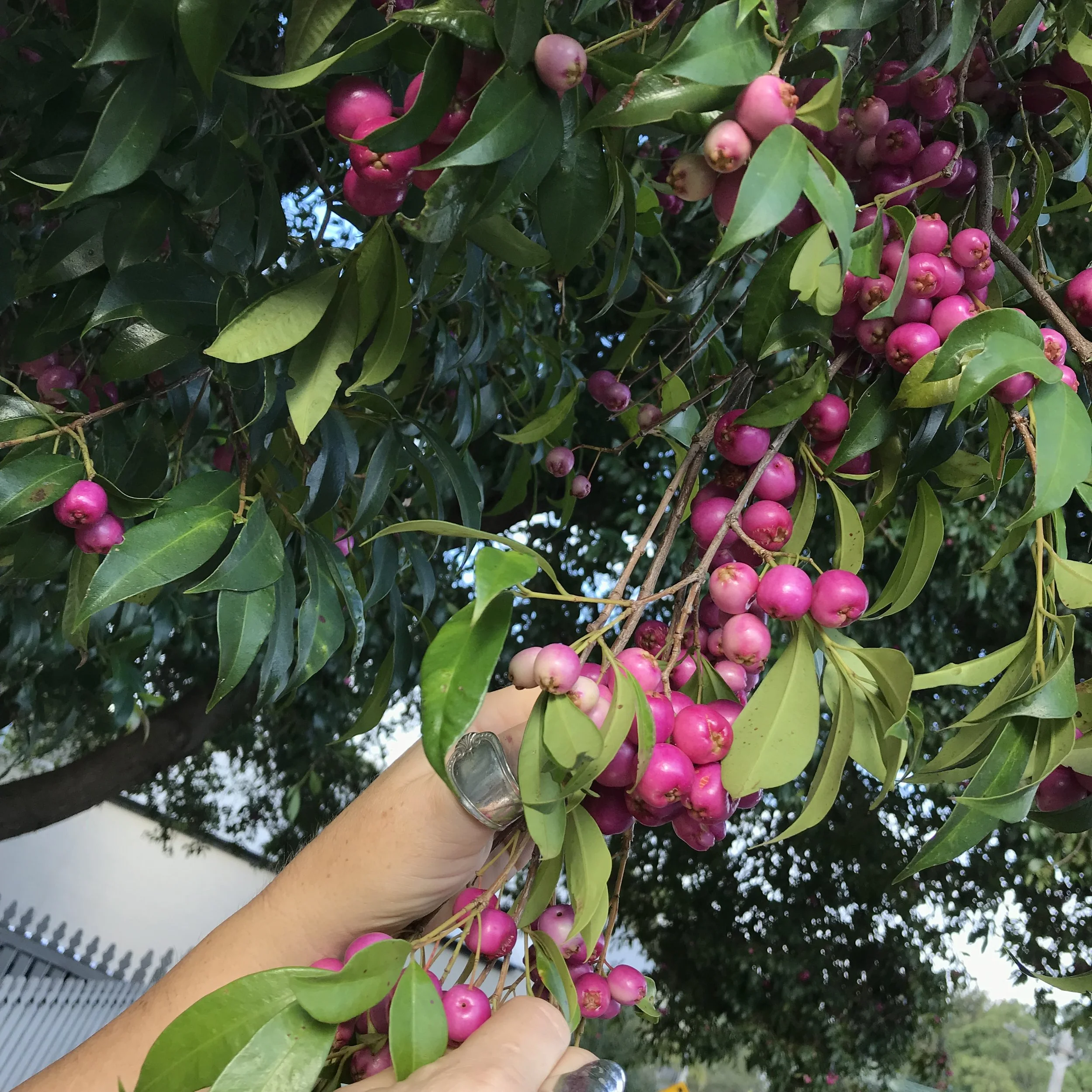
Magenta lilly pillies on tree
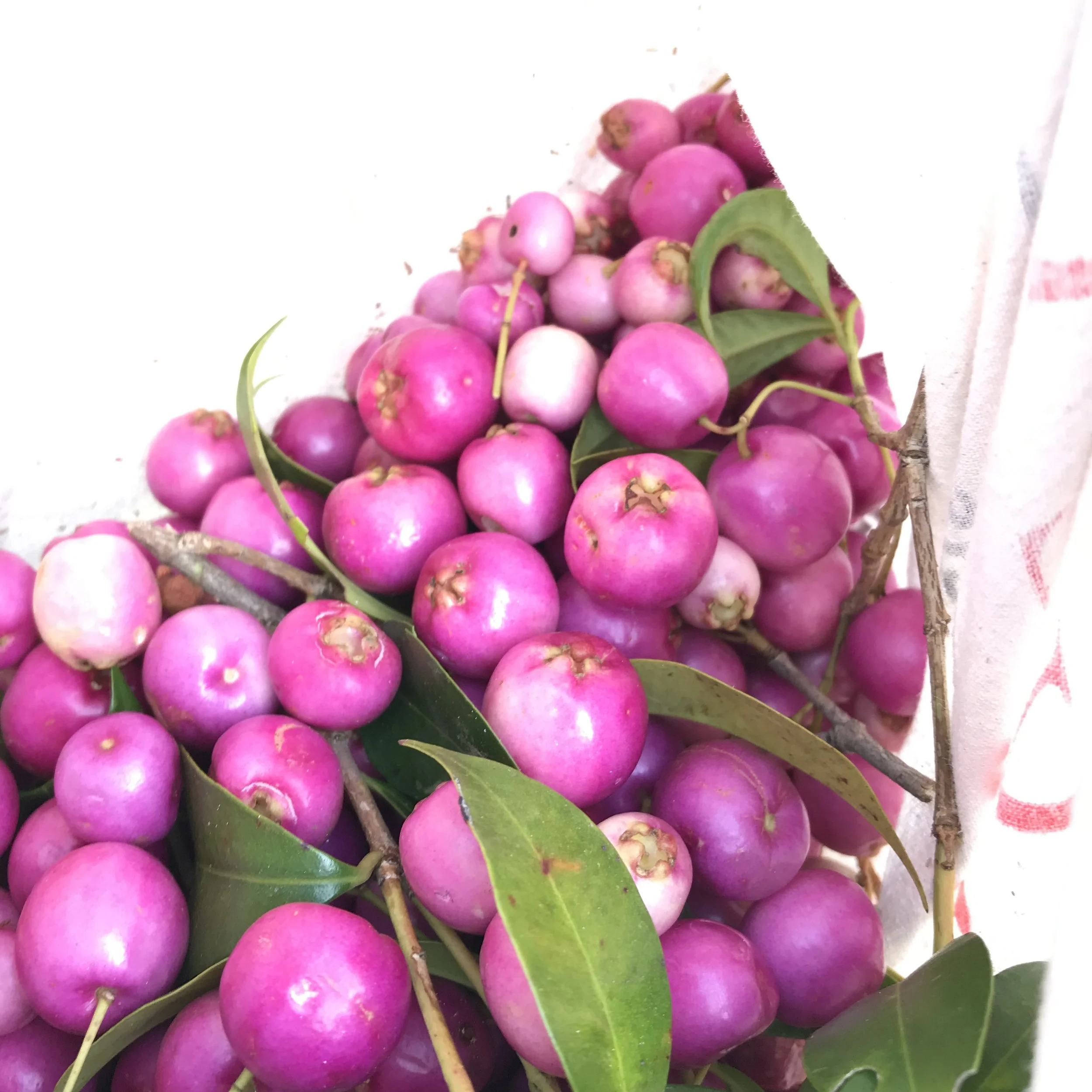
Magenta lilly pilly harvest
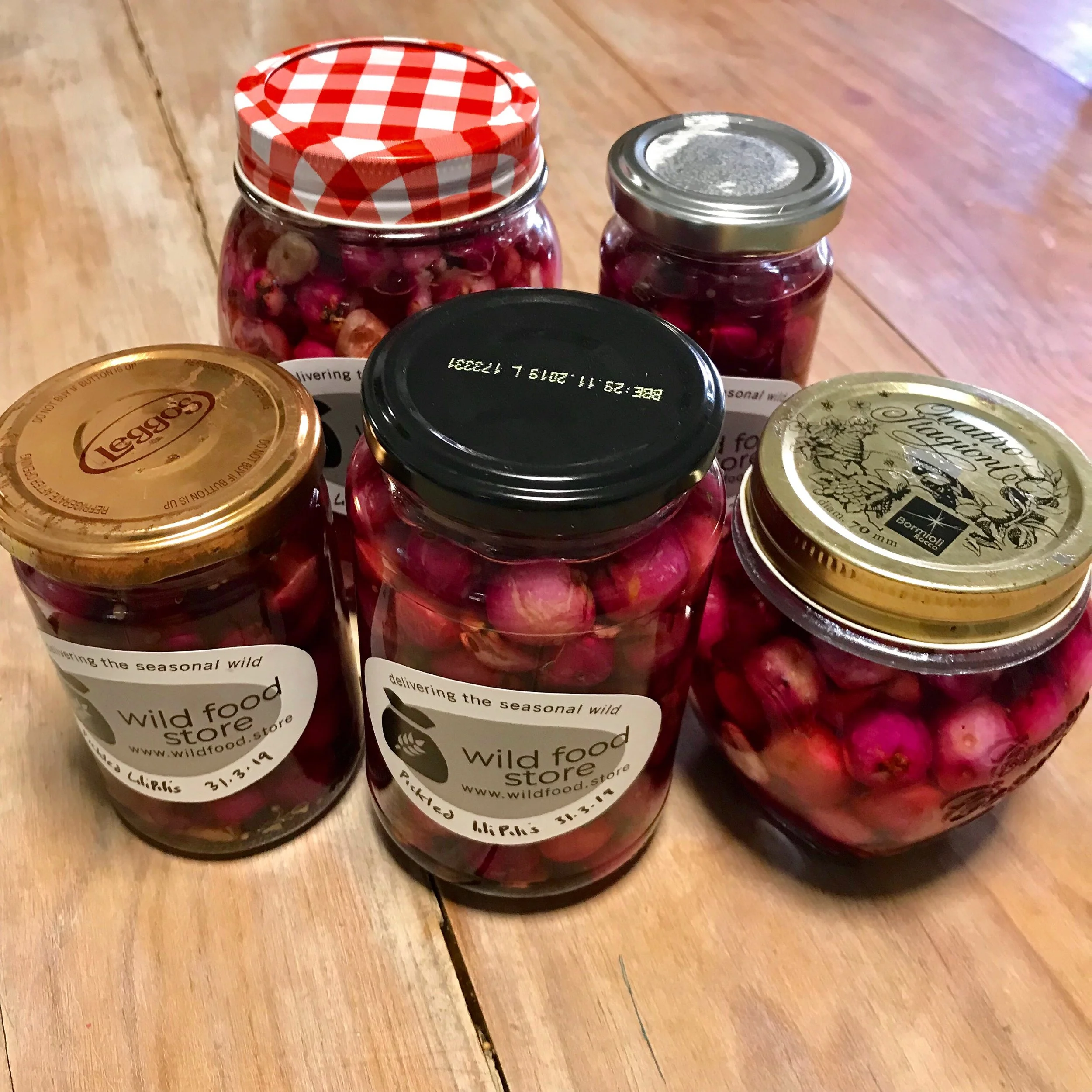
Pickled lilly pillies
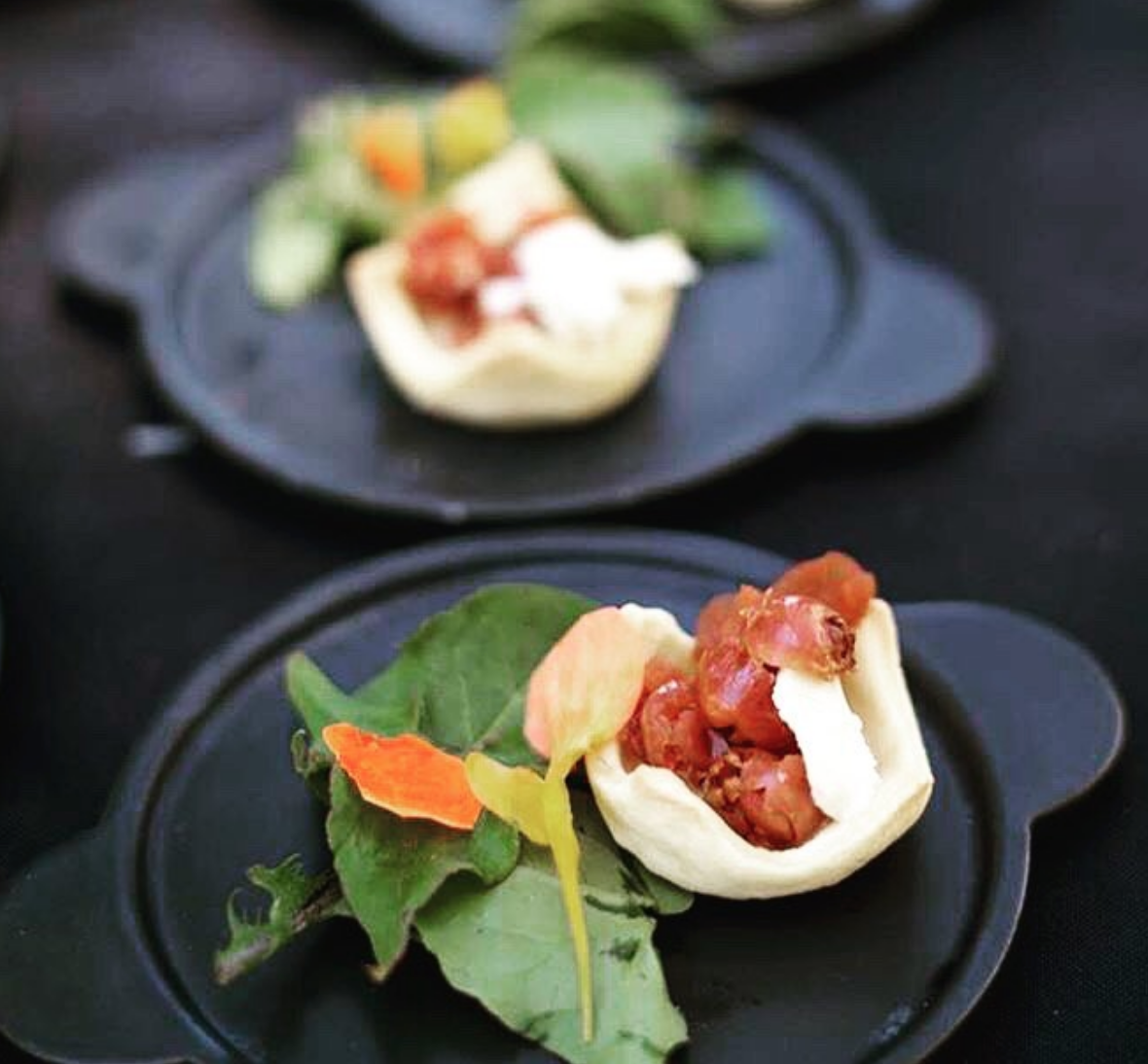
Pickled lilly pilly tart
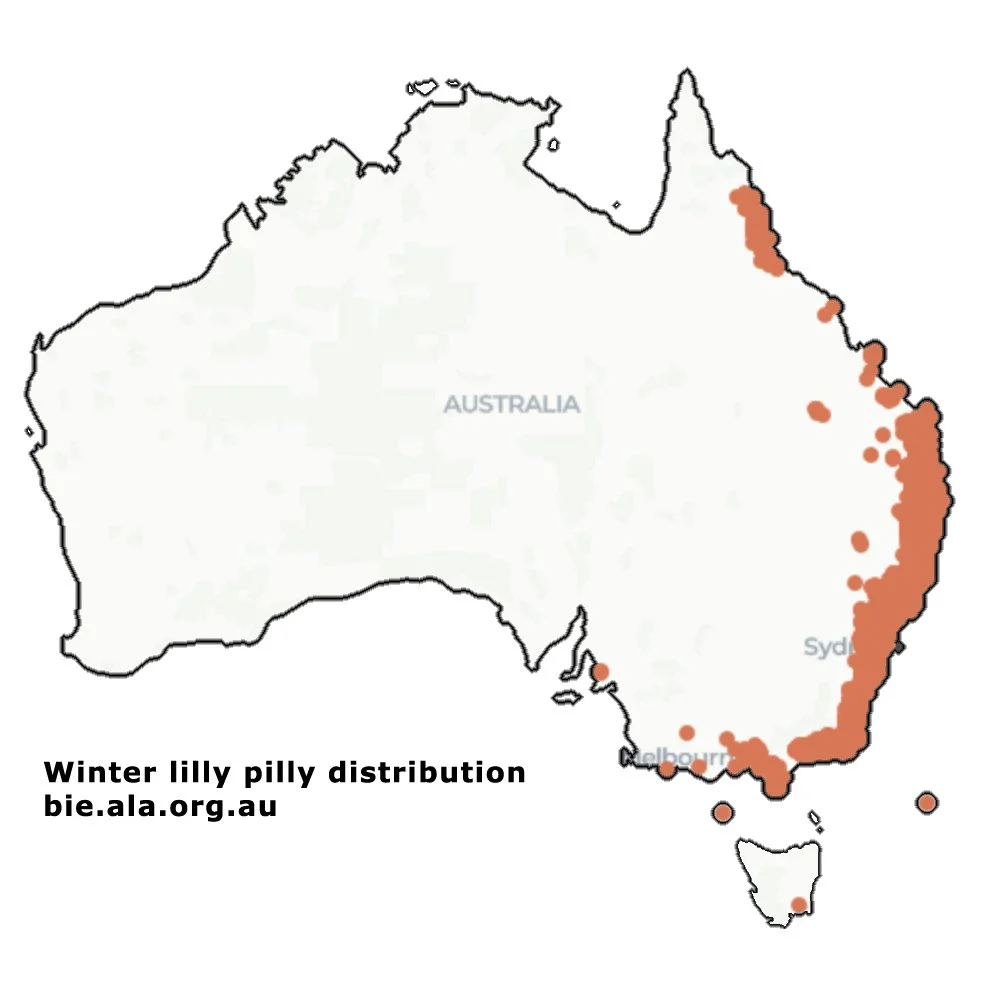
Winter or common lilly pilly (Syzygium smithii)
This would be the most commonly planted lilly pilly. It is also the one with the most extensive natural range, stretching from Mackay in Queensland all the way to Melbourne. Syzygium smithii is easily distinguished by its big clusters of small berries, which vary in colour from white to dull red. The round berries grow up to 15 millimetres in diameter, and often have a depression at the top. There is not much flesh on these fruits, and often the commercial varieties are quite sour. Perhaps not so great to eat fresh from the tree – but in my opinion they make the basis of a tasty fermented beverage. This plant fruits in winter, from May to August, providing fresh berries at a time when they are otherwise scarce.
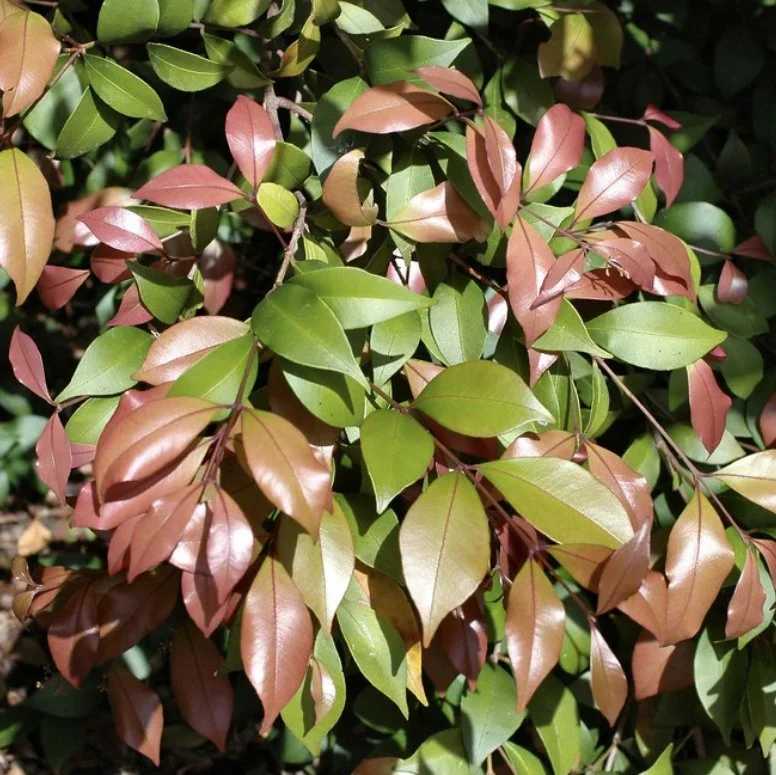
Lilly pilly foliage
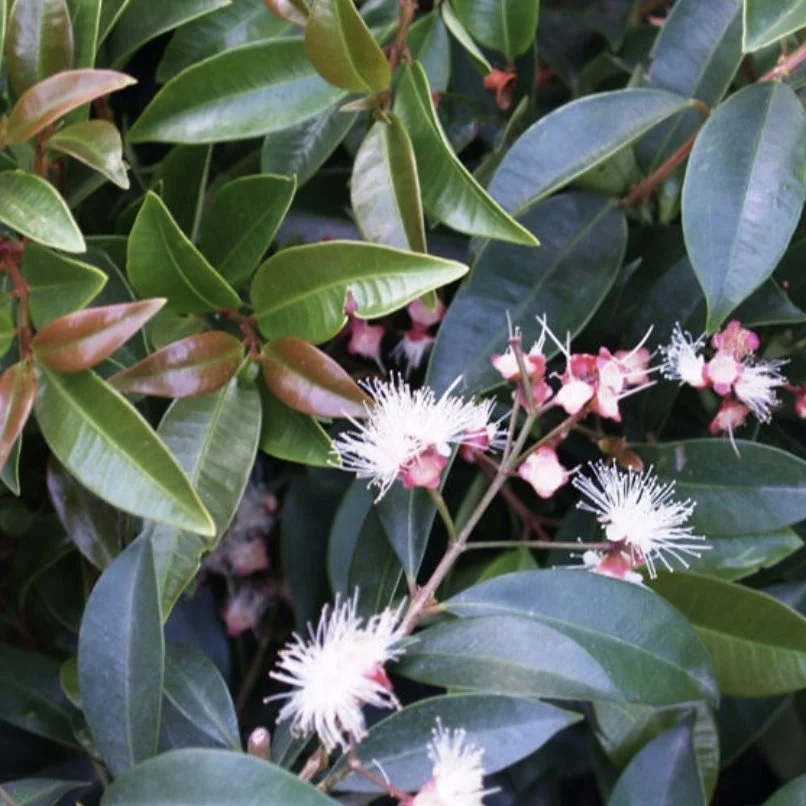
Winter lilly pilly flowers
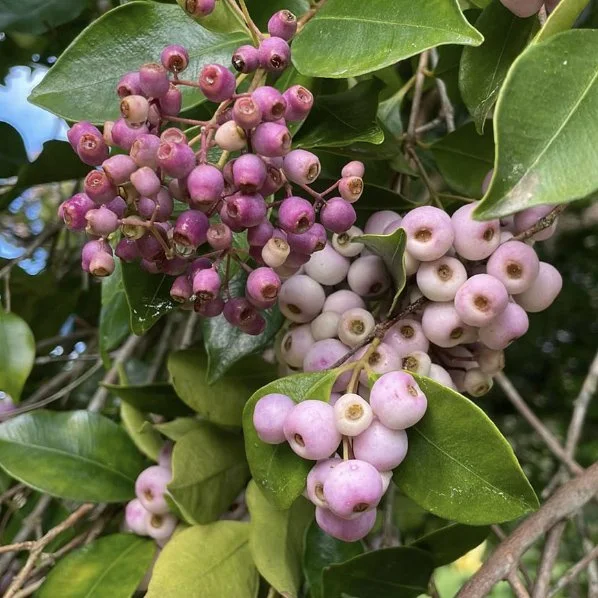
forming and mature fruits
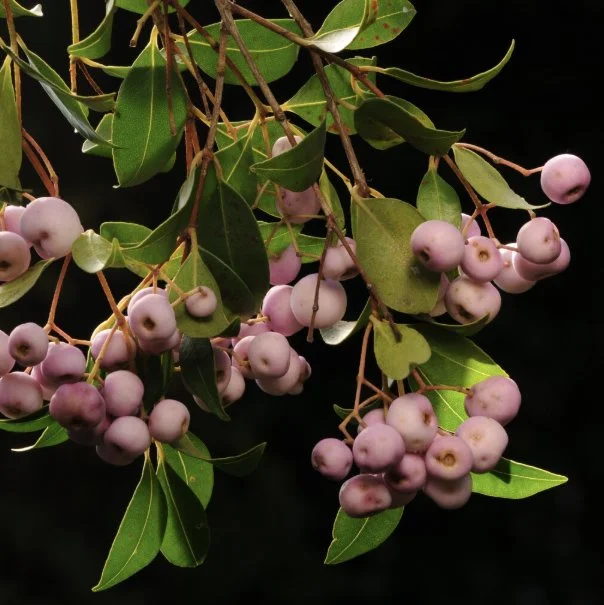
mature fruits
Lilly pilly as food
Lilly pillies and related species are most appreciated for their berries, which can be used in jams, jellies and pickles (as in the recipe below), and made into syrups and cordials. Australia’s early European colonists used lilly pillies as a wild food plant, learning from thousands of years of knowledge shared by Aboriginal people.
The berries can be eaten raw, but tend to be sharp, at times bringing a strident acidity.
Lilly pilly fruit need to be de-seeded before processing into jams – tedious work, but oh so worth it.
Pickled lilly pilly
These pickled lilly pillies pair well with cheese, salads and roast vegies.
Makes four 250 ml jars
Ingredients
1 kg fresh lilly pillies
2 cups red wine vinegar
2 cups caster sugar
1 stick cinnamon bark
4 slices fresh ginger
2 teaspoons pickling spice
1. De-seed the lilly pillies by using both your thumbs and forefingers to split the berry in half to reveal the seed. The seed should come away easily. Set the berries aside in a bowl.
2. Sterilise four 250 ml pickling jars. Once the jars have cooled, add a quarter of the cinnamon bark, ginger and pickling spice to each container.
3. Combine the vinegar, sugar and 500 ml of water in a small saucepan over low heat, stirring until the sugar dissolves. Increase the heat, bring the mixture to the boil, then remove the pan from the heat and set aside.
4. Pack the de-seeded lilly pillies into the jars and pour the hot vinegar mixture into each container. Allow the jars to stand for a few minutes. The liquid should reach 1–2 centimetres from the rim of the jar and fully cover the fruit. You may need to top up the liquid.
5. Seal and label the jars, including the date made. To check that your jars are well sealed, while they are still warm turn them upside-down for a few minutes.
6. This pickle keeps for up to a year stored in a cool, dry place away from sunlight. Once opened, it should be kept in the fridge, and will last for up to a month.
Acknowledgment of Indigenous Knowledge Rights
Lilly pillies (Syzygium spp.) have longstanding cultural, nutritional and ecological significance for Aboriginal peoples across eastern Australia. Their colourful, edible fruits have traditionally been gathered and eaten fresh, forming part of their seasonal food knowledge and connection to Country. Specific language names recorded for Syzygium paniculatum include Midjuburi (Dharug and Gadigal), Ngawan (Yugambeh-Bundjalung), Burangirbang (Gathang) and Dudagur (Darkinjung). These names reflect distinct cultural relationships with the plant.
Note: These language names are documented in the NSW Government's conservation assessment and should not be assumed to apply universally to every Syzygium species.
Further research
Wikipedia on Riberry >Syzygium_luehmanni
Wikipedia on Scrub Cherry> Syzygium_australe
Wikipedia on Magenta lilly pilly> Syzygium_paniculatum
Wikipedia on winter lilly pilly> Syzygium_smithii
Roar Sweetly on cooking with Lilly pillies
The guardian on riberries
Taste Australia on lilly pilly
Atlas of Living Australia on lilly pillies distribution
