
Grey knights, Nobility at our round table
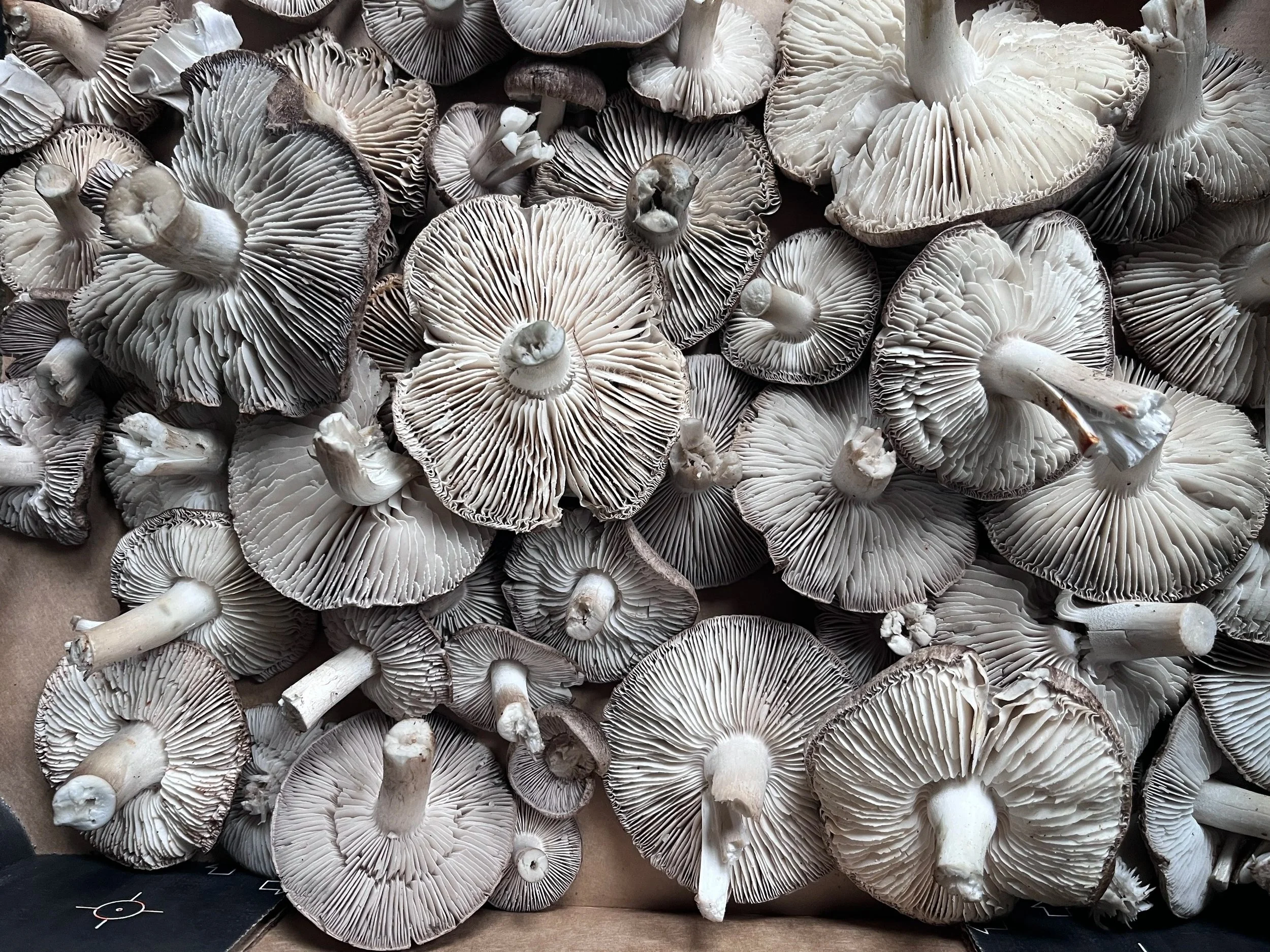
Grey Knights, in my opinion are among mushroom nobility when it comes to flavour and are a seasonal favourite served at our dinner table. From paté to faux fish curry, we love them. Grey knights texture and flavour are revered across Spain and France, where they regularly appear on the seasonal stall of wild mushrooms markets. Here in Australia, in our opinion, they are under-appreciated.
The question about edibility
If you do a google search on grey knights you will soon come across the contested edibility related to a study from 2014 presenting evidence of poisonous compounds in the species. The study that pointed at this was disproven in 2016 and dismissed in 2024, as the amount of grey knight mushrooms that a human would need to ingest in order to be considered problematic, are beyond what anyone would eat in one sitting. You can read the full report on this article published in Chemistry Europe scientific journal. “In conclusion, we feel the urge to reassure the mycological community that T. terreum, on the basis of the current body of knowledge, is not a poisonous species”. Amazing to have as written fact what we knew already.
Grey knight - Tricholoma terreum
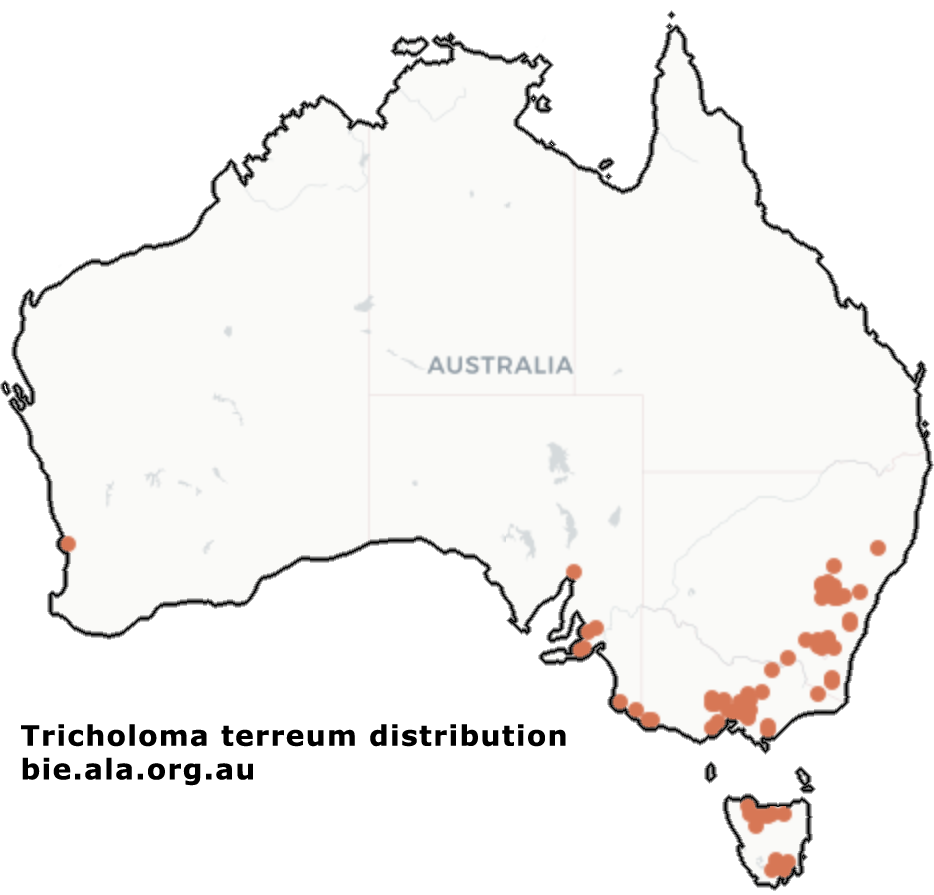
The grey knight is found in pine plantations across south-eastern and south-western Australia, particularly under older trees where the pine needles lie thick and undisturbed. Depending on temperature and autumn rainfall, theyare generally in season from April to June. They appear in loose clusters or alone and are far less common than saffron milk caps or slippery Jack/Jills. Finding them often feels like unearthing treasure — a quiet reward for slowing down.
Scales on cap
Identification: the back-of-a-mouse mushroom
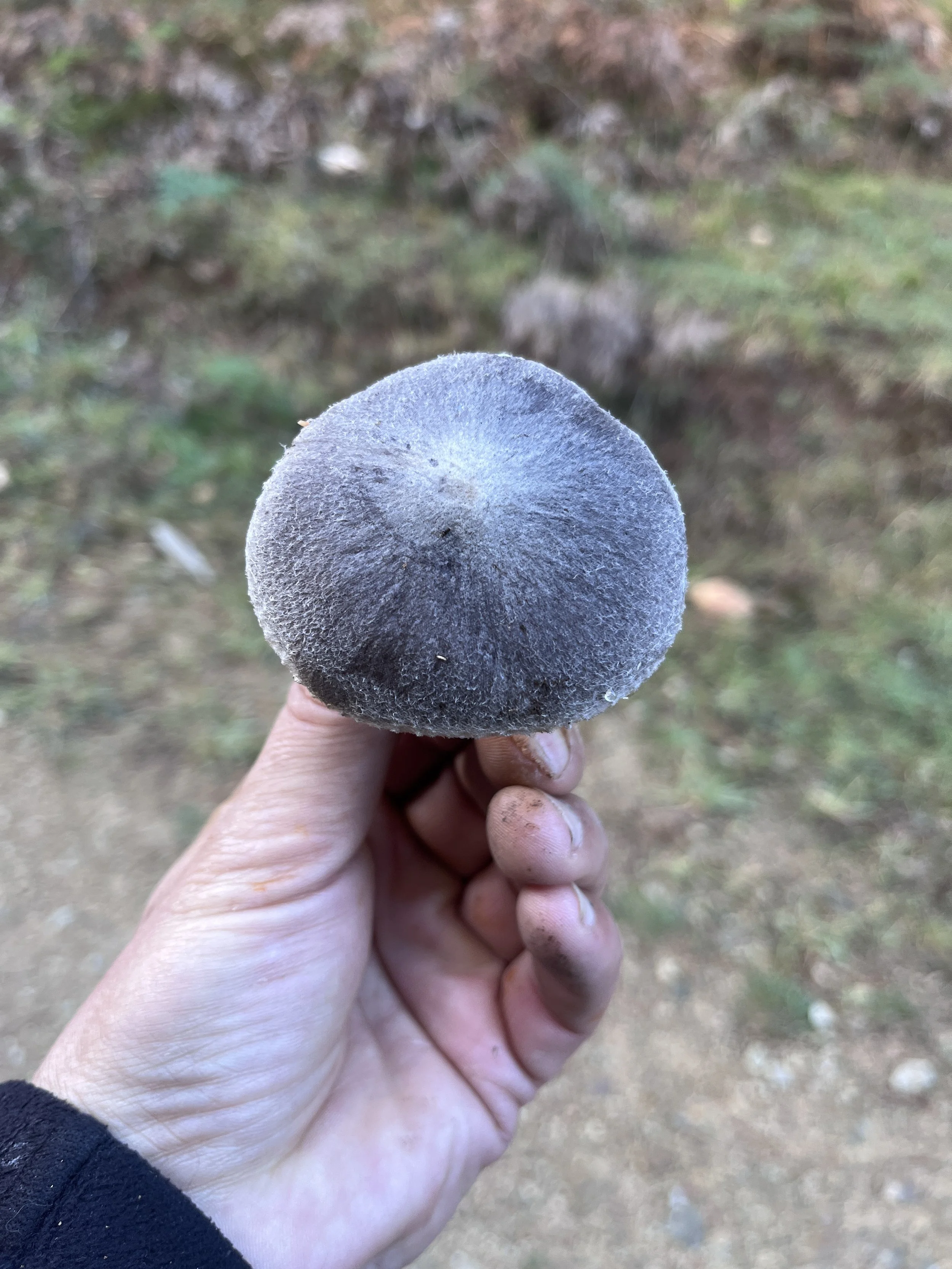
The best way to describe the appearance of grey knights is to say that the cap looks like the back of a grey mouse: softly furry, grey to grey-brown in colour, with bright white gills underneath. It is a subtle mushroom — no vivid oranges, no sticky surfaces — just muted tones that blend seamlessly with pine litter.
Cap
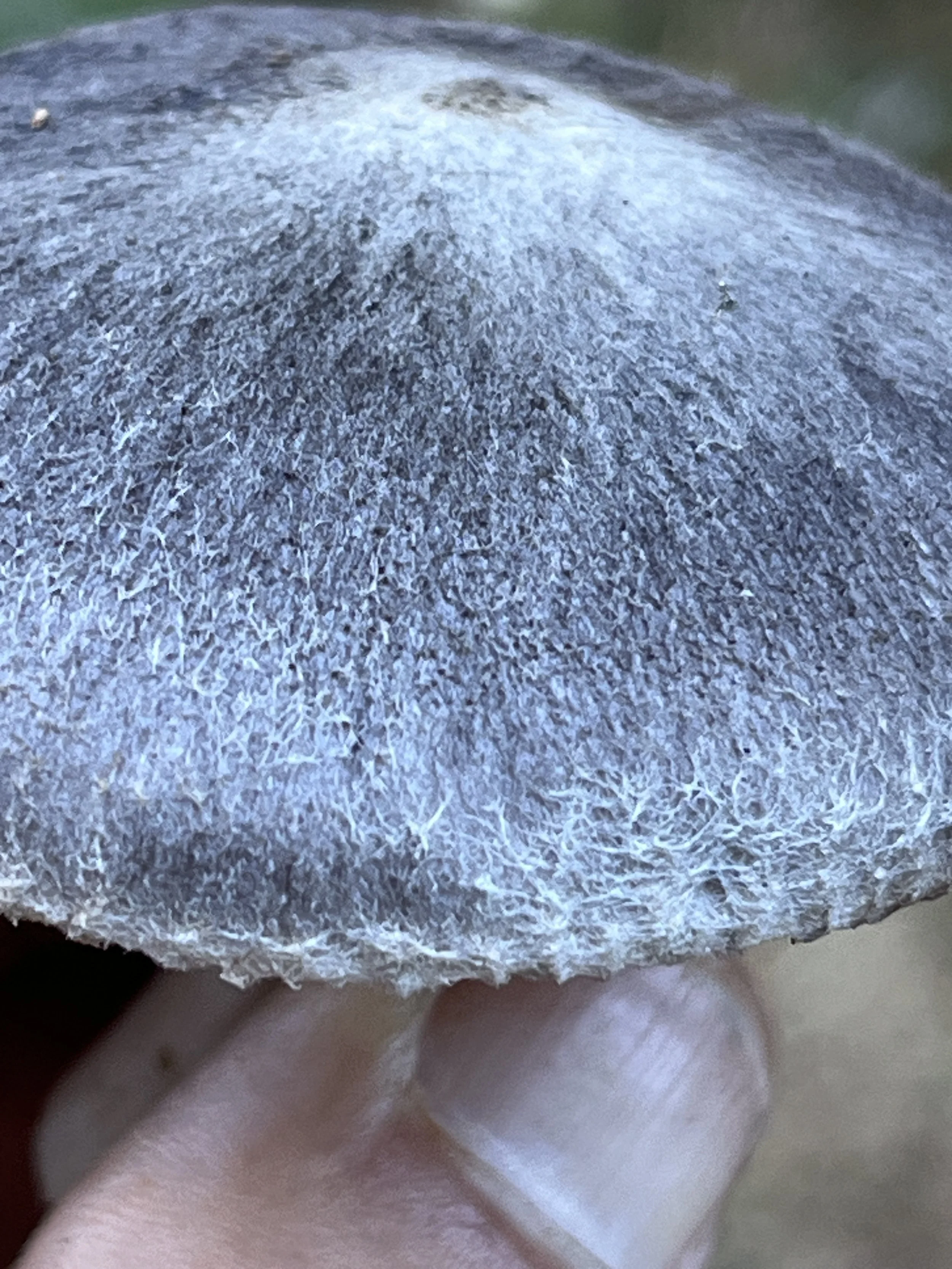
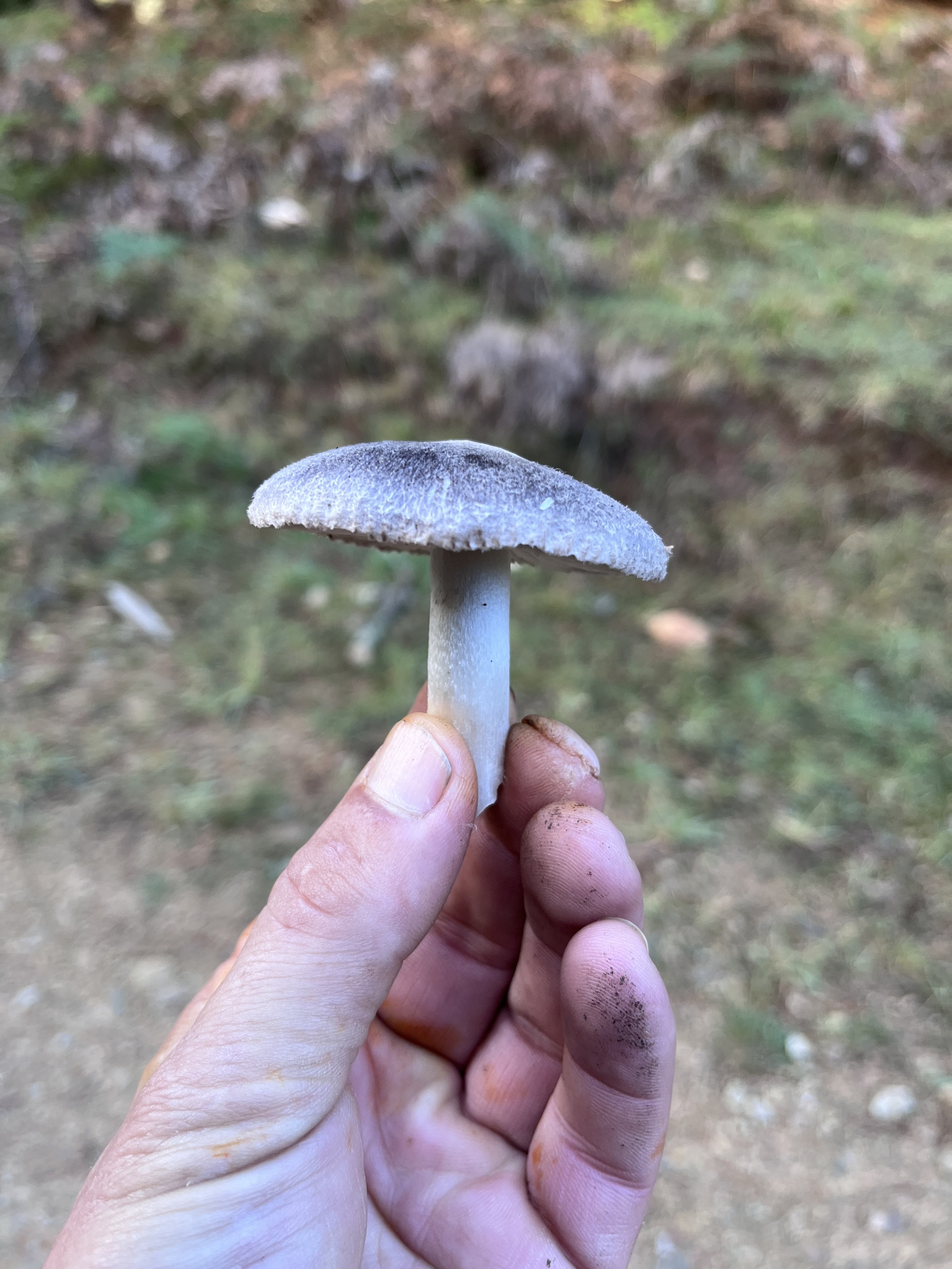
The cap is 4–7 centimetres wide. It ranges from grey to light brown and is evenly covered in fine, silky scales that reflect the light, giving it a soft, fur-like sheen. When young, the cap is convex and broadly conical, sometimes with a slight indent on one side. As it matures, it flattens gently and may develop a shallow central depression. In dry weather, the surface can appear almost silvery.
Underside
The grey knight is a gilled mushroom. The lamellae are bright white when fresh, developing a faint yellow tinge in older specimens (three to five days old), though the change is slow and subtle. The gills are relatively wide apart and not attached to the stalk — an important identification feature.
Spores
The spores are white, producing a clean white spore print.
Stalk
The stalk is off-white, cylindrical, and 3–8 centimetres long, up to about 1.5 centimetres thick. It has no ring. When broken, it reveals a fibrous interior. The absence of a ring, combined with the dry, silky cap, helps separate it from other autumn species.
Flesh
The flesh is white to off-white and easily damaged, so pack delicately when harvesting. It carries a pleasant, mild, hazelnut-like aroma — gentle rather than strong. The scent is one of its most appealing characteristics.
Grey knight cap
Shape
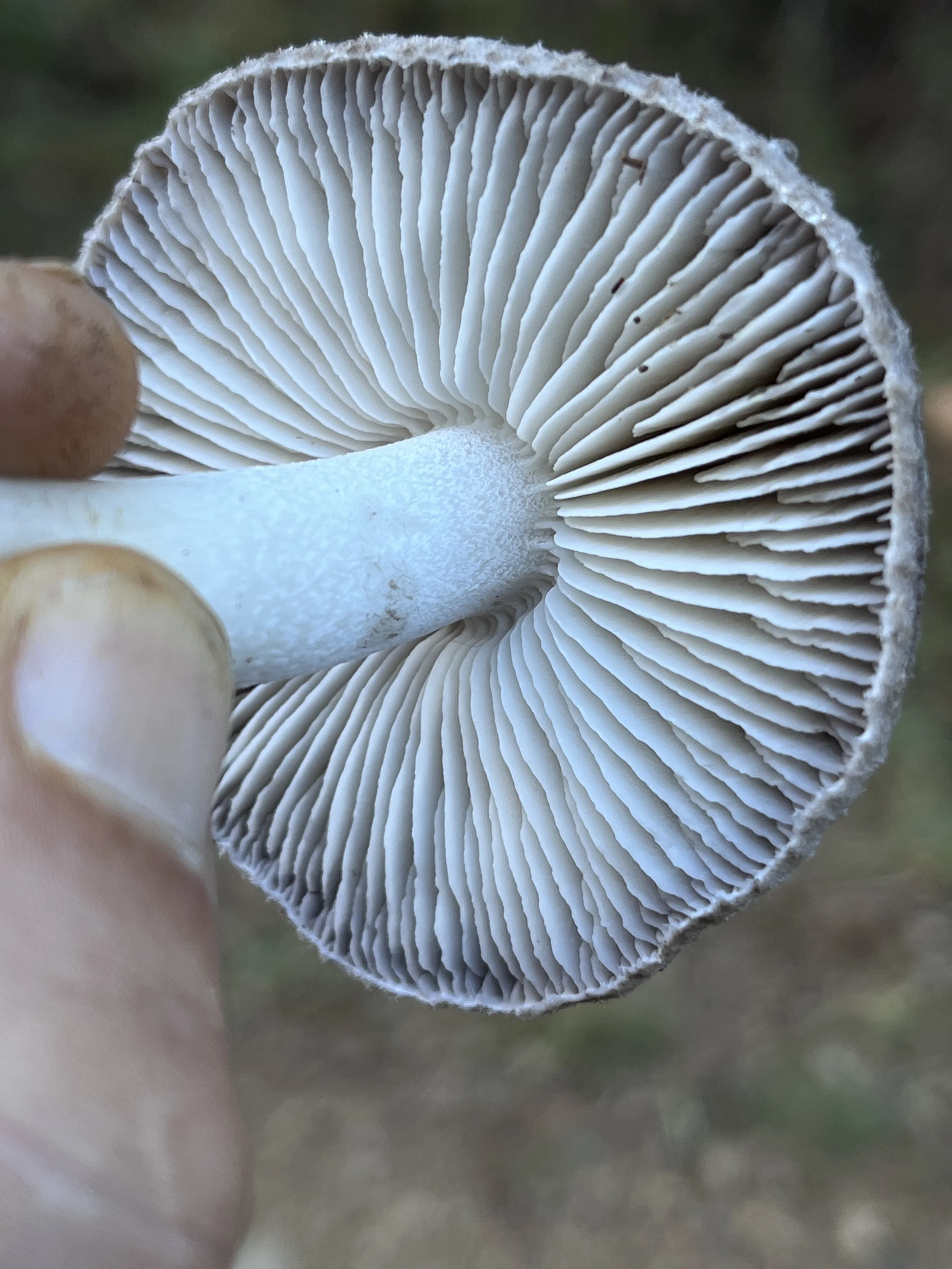
Gills
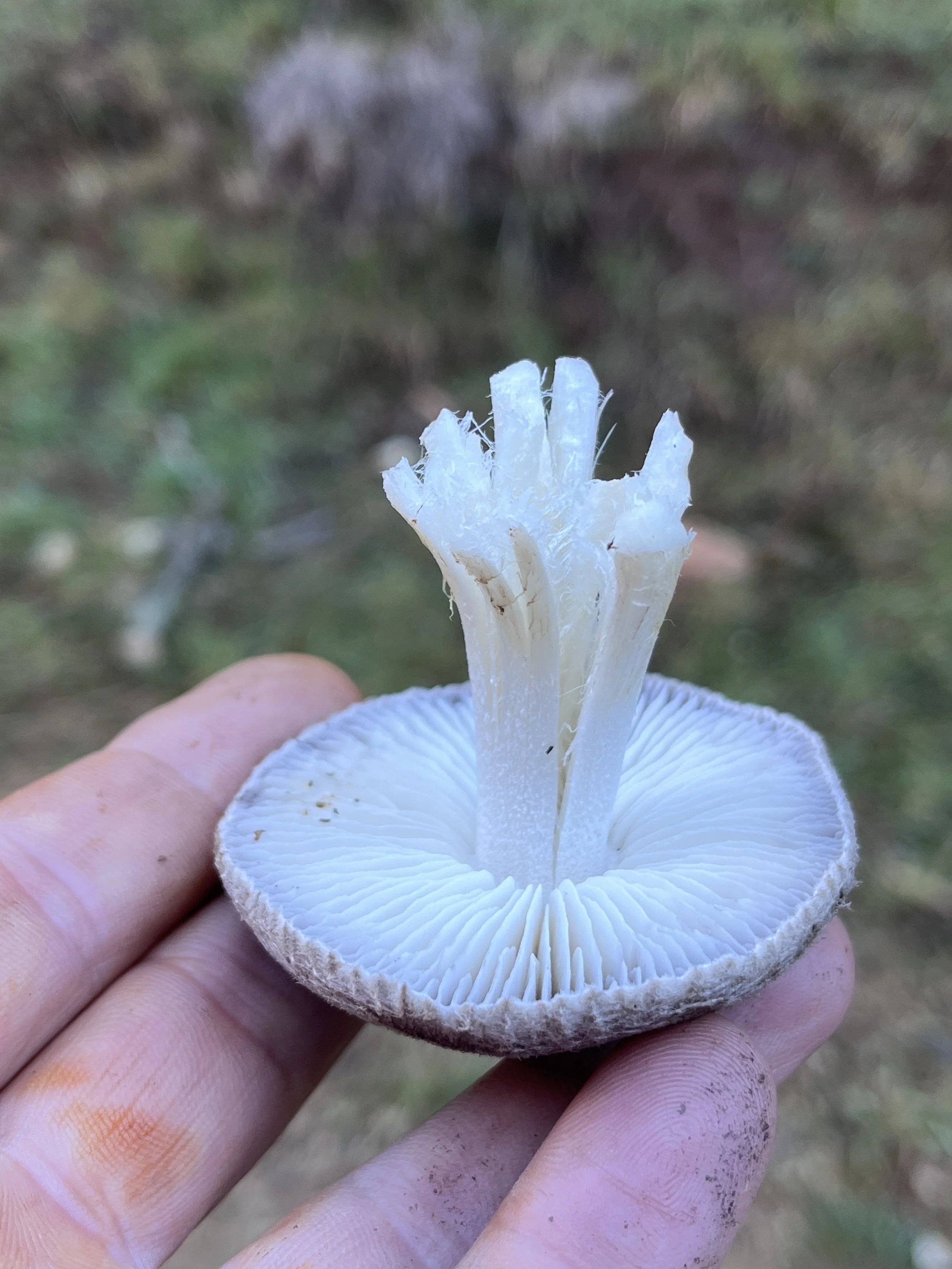
Stalk
Where to find Grey knights
Like other members of the genus Tricholoma, the grey knight is mycorrhizal, forming a symbiotic relationship with pine trees. Beneath the forest floor, its mycelium intertwines with tree roots, exchanging nutrients for sugars. This partnership enhances the tree’s ability to absorb water and minerals, contributing to soil health and plantation resilience.
When we encounter the mushroom, we are seeing only the fruiting body — the visible expression of a much larger organism woven invisibly through the soil.
Grey knights favour older plantations where the needle layer has built up over time. They often emerge through soft ground cover after steady autumn rain, when the soil remains cool and moist.
Please see the map here for the distribution of Thricholoma terreum in Autralia. Mostly limited to pine plantations in the South east of the continent.
Edibility and caution
Traditionally regarded as edible, Tricholoma terreum has been consumed in parts of Europe and is appreciated by many Australian foragers. Its flavour is mild, slightly nutty, and delicate rather than bold. It takes on a slightly fishy flavour when cooked.
Because of this subtlety, it responds best to simple cooking. A quick sauté in olive oil with a pinch of salt allows its gentle character to shine. It works well folded into omelettes, added to light broths, or combined with herbs like thyme. Overcomplicating it can overwhelm its natural flavour.
However, careful identification is essential. The genus Tricholoma contains species that are not edible, and grey mushrooms can easily confuse beginners. Always confirm multiple identifying features — habitat under pines, silky cap texture, white spores, unattached gills, absence of a ring.
The best approach would be to go in the forest with an experienced forager, who will be able to show you the difference in the field between true grey knights and the similar poisonous look alike. This is not a mushrooms for beginners.
Moderation is also wise. Some overseas studies have raised questions about heavy, repeated consumption over consecutive days. While occasional seasonal use is generally considered safe by experienced foragers, balance and caution should guide any wild harvest.
Foraging notes
Walk slowly through pine plantations in autumn. Scan for small, rounded mounds beneath the needles. Often only the edge of the cap is visible at first. Gently brushing aside the duff will reveal the bright white gills beneath.
Harvest selectively, cutting at the base rather than pulling, and leave smaller specimens to mature and release spores. Avoid collecting from polluted areas such as roadsides, as fungi can accumulate heavy metals.
In the end, the grey knight is less about abundance and more about attentiveness. It rewards careful observation and seasonal awareness. Modest in appearance yet ecologically significant, it reminds us that some of the forest’s finest offerings are those that blend quietly into the landscape — waiting for those who have learned how to look.
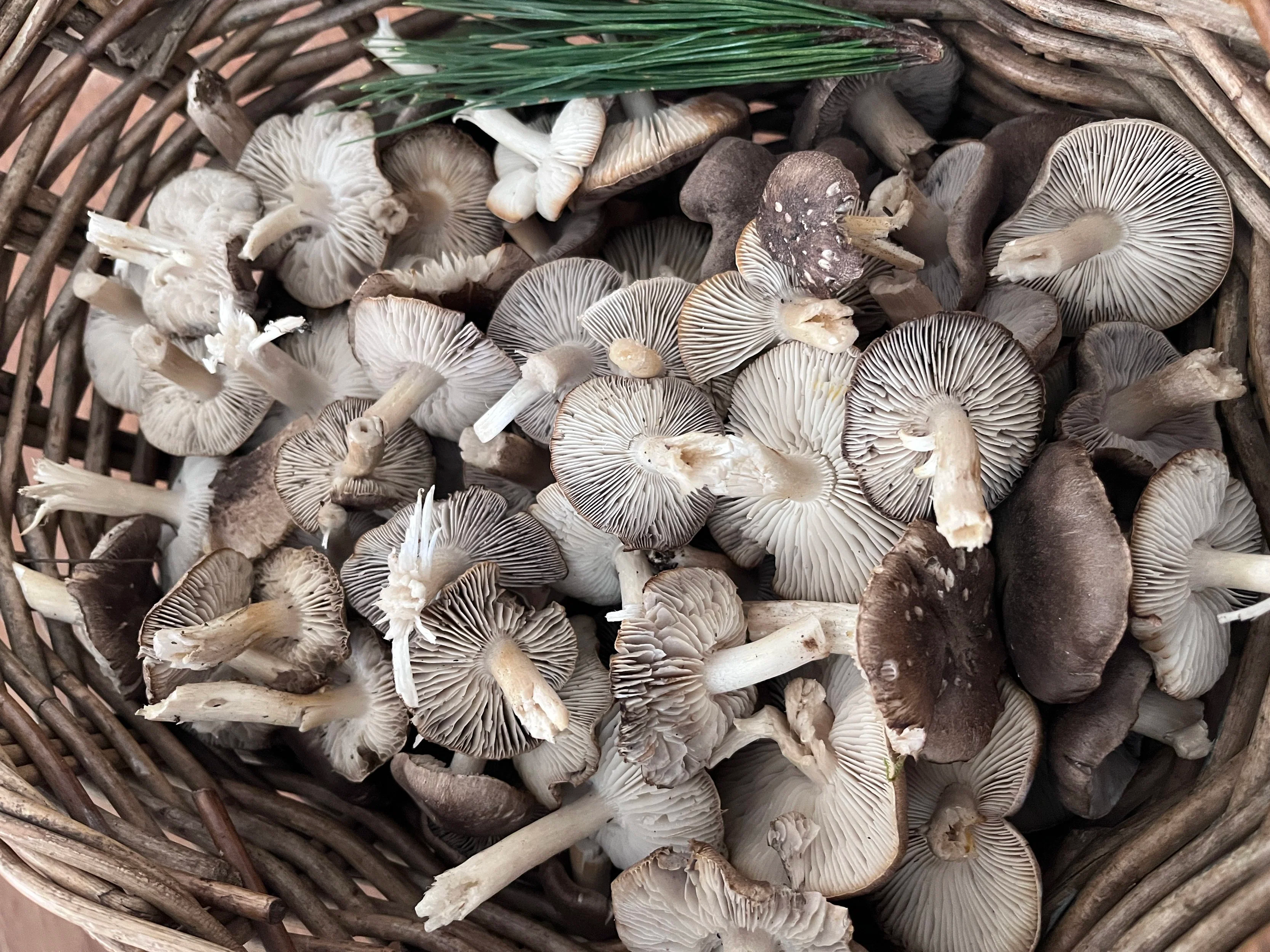
Grey Knight (fishy) curry
The ‘fishy’ flavour and white fish like flesh of the Grey Knight makes it the perfect vegan option for a warming autumnal curry.
Ingredients
2 tbs coconut oil
1 onion finely chopped
3 cloves garlic thinly sliced
2 tbs freshly grated ginger, about a 5cm piece
2 tsp curry powder
1 tsp ground turmeric
10 – 15 fresh curry leaves
400ml (1 can) coconut milk
2 medium tomatoes, roughly chopped
1 tsp salt
500g fresh Grey Knight mushrooms cleaned and kept whole or cut into 50 cent size pieces
20g (1 cup) chopped fresh coriander
1 lime juiced
Method
Clean your Grey Knights and gently pat out excess water with a clean tea towel or paper towels.
Dry fry your mushrooms in a medium saucepan until all the water has evaporated. This could take 10 – 20 minutes depending on how much water they are holding. Place mushrooms in a bowel carefully and set aside.
Melt the coconut oil in the saucepan.
Sauté the onion for about 5 minutes over a medium heat until translucent and just starting to brown.
Add the garlic and ginger, and cook, stirring gently for 1 minute.
Add the curry powder, turmeric and curry leaves, and cook, stirring for another minute until the mixture is fragrant.
Slowly stir in the coconut milk, scraping up the spices and onion from the bottom of the pan. Bring the pan to a gentle simmer.
Add the chopped tomato, and continue to simmer for about 5 minutes or until the tomato begins to soften.
Add the cooked grey Knights and the salt to the sauce, and gently cook for about 6 - 8 minutes so the mushrooms can soak up the sauce.
Gently stir in the coriander and lime juice.
Serve on a bed of steamed jasmine rice and garnish with extra coriander, fresh chilli or finely sliced red capsicum.
Further research
ALA - Tricholoma terreum distribution
Pat O’reily on Grey Knights
Wikipedia on Grey Knights
Kingfisher Mushrooms on Grey Knights
Ligaya Garden on Grey knights
