
How to identify and eat ice plant
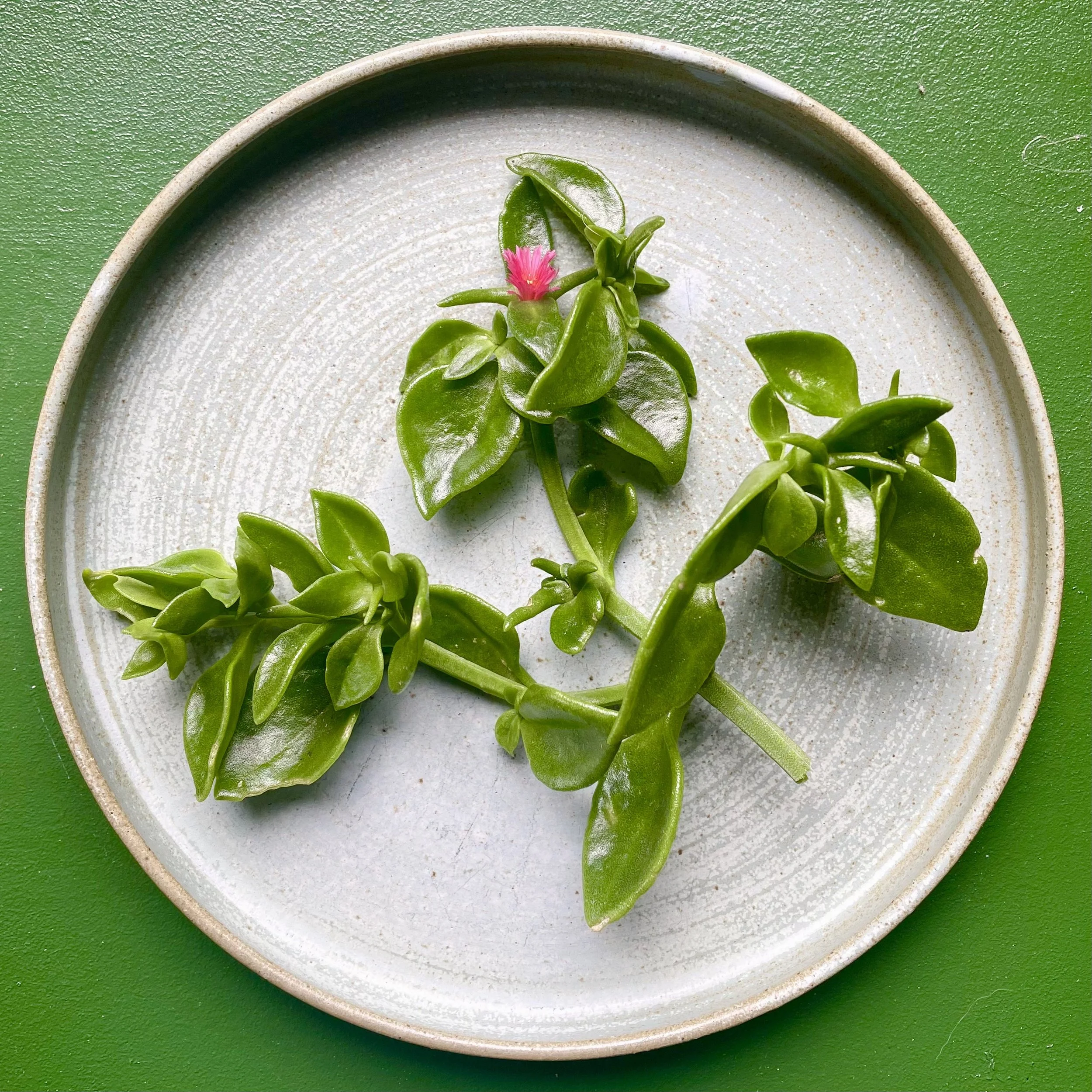
Some plants you need to follow the season, others you need to be aware of cycles, others still you only ever harvest once. In the case of ice plant/baby sunrose, you can enjoy it anytime, and there will be more the day after. Sounds amazing? Read on.
Ice Plant / Baby Sun Rose (Mesembryanthemum cordifolium)
Mesembryanthemum cordifolium, commonly called Baby Sun Rose, Heart-leaf Ice Plant, Heartleaf Ice Plant or Dew Plant, is a low-growing succulent from southern Africa. In Australia it has escaped cultivation and become naturalised, particularly in coastal and populated areas. This specie is also known as Aptinia cordifolia. It is closely related to native warrigal greens and pigface, all part of the same family: Aizoaceae
How to identify it
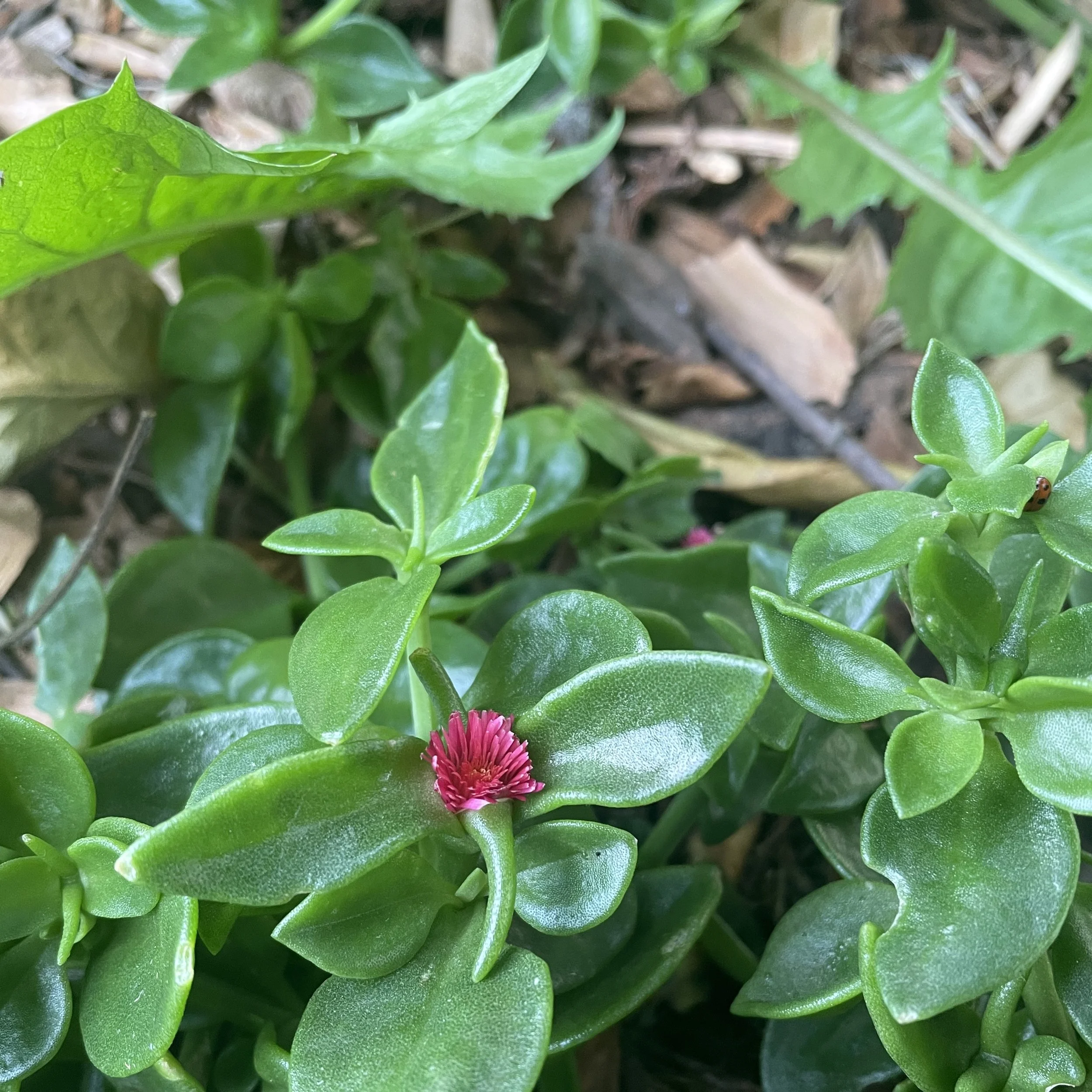
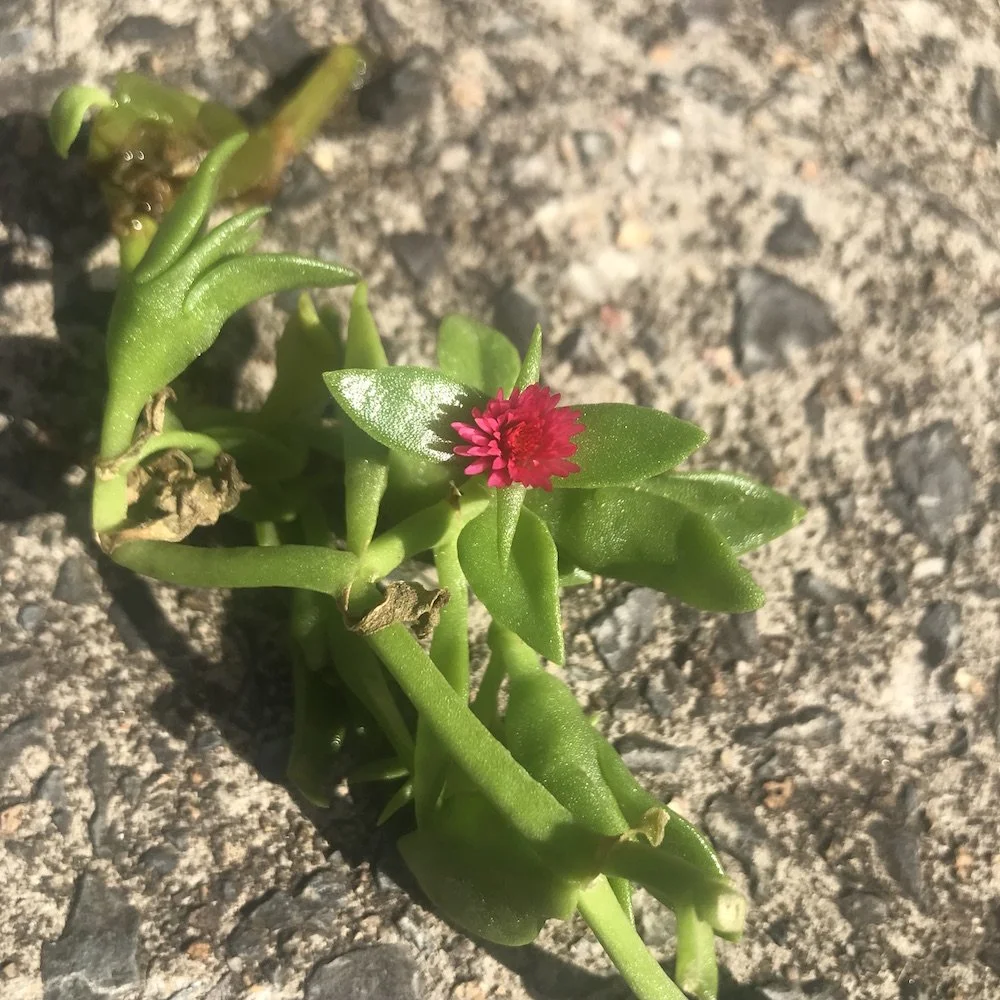
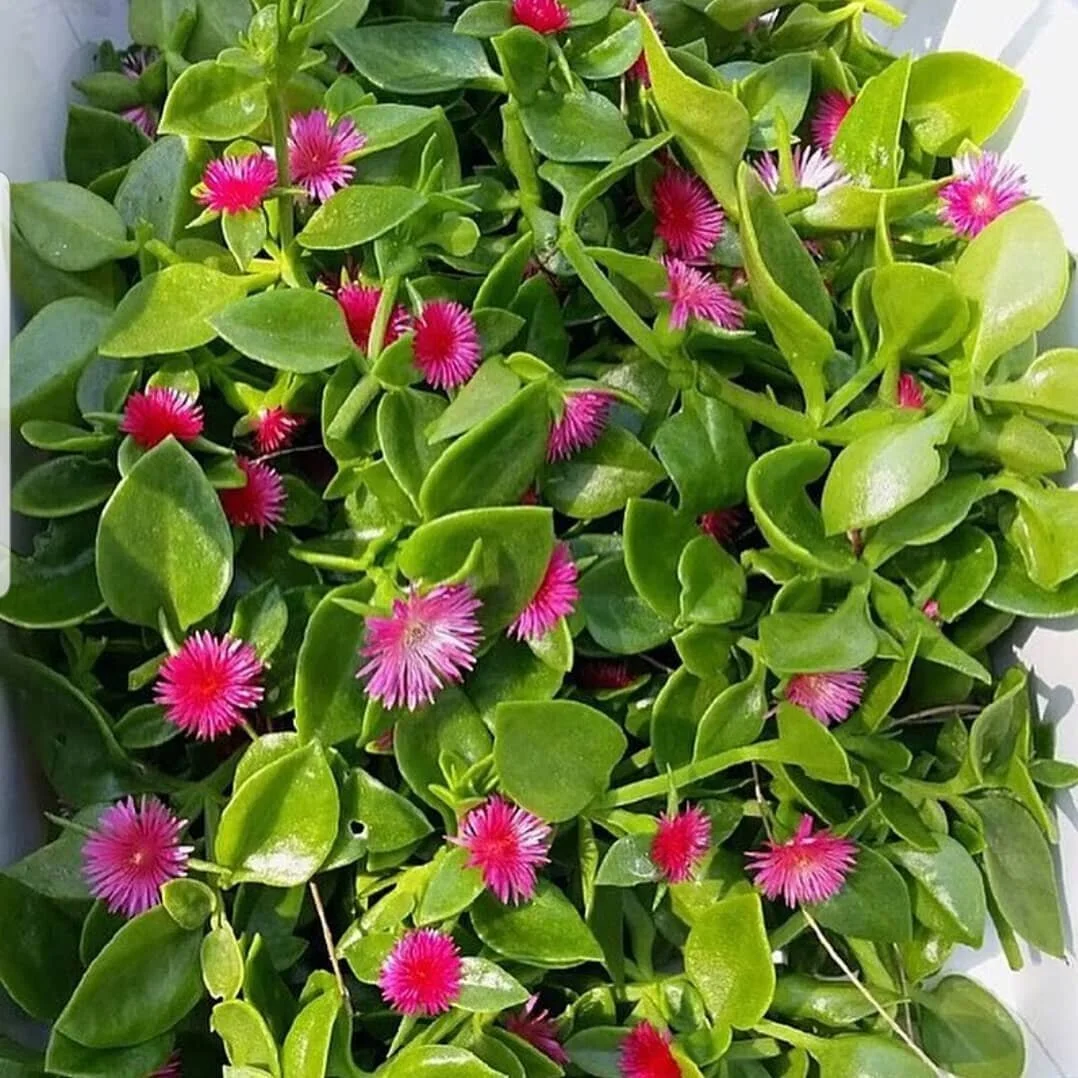
Baby Sun Rose is a succulent ground cover that spreads along the ground, making a dense mat. It is a short-lived perennial, meaning that when you find a colony it will likely be there year after year. The stems are soft and fleshy, and the leaves are:
bright to medium green
thick, smooth and succulent
opposite each other along the stem
distinctly heart-shaped
usually about 1–2.5 cm long
hairless and slightly glossy.
The flowers are small, up to 15mm in diameter, bright pink, reddish-purple or magenta and have many narrow petal-like parts. They commonly open in sunny weather, particularly around the middle of the day.
A good identification rule: look for the combination of a creeping succulent mat, paired fleshy heart-shaped leaves and bright pink/red flowers.
Where you may find it in Australia

Ice plant is originally from southern Africa and is now naturalised in parts of Australia.
It has been recorded in coastal and disturbed areas, including parts of Queensland, New South Wales, Victoria, South Australia, Tasmania and south-west Western Australia. In NSW, PlantNET describes it as scattered in coastal areas.
You may encounter it around old gardens, roadsides, coastal settlements, disturbed ground, rockeries and places where garden plants have escaped.
However, finding it growing wild does not mean it should be harvested there. Avoid plants beside roads, areas treated with herbicides or pesticides, contaminated sites, dog-walking areas, drains and polluted waterways.
Is it edible?
Yes, and yummy. The flavour of the succulent leaves can be quite sharp, sour or salty-tart, so it is better regarded as a small amount of interesting edible greenery rather than a main vegetable. We love it as garnish for quirky deserts, served as a side nibble to anything that calls for a tangy addition. Always raw, as fresh as it comes (it grows ‘wild’ in our garden) and occasionally as an impromptu snack as we walk past.
How to harvest
Choose a healthy, actively growing plant from a clean source.
Select young, tender leaves and soft growing tips.
Use clean scissors or secateurs rather than pulling the plant apart.
Take only a small proportion of the plant so that it continues growing.
Put the harvest into a clean container rather than a plastic bag where it will become hot and crushed.
Wash thoroughly under clean running water before eating or cooking.
Do not collect from national parks, conservation reserves or private property without permission. And never deliberately spread M. cordifolium by throwing cuttings into the garden or bush: fleshy pieces can readily establish new plants.
Preparing the leaves
Wash the leaves and tender shoots thoroughly and remove any damaged portions.
For a fresh preparation, use a small quantity of young leaves mixed with milder salad ingredients. Their juicy, crisp texture and sour flavour can work well with:
tomato
cucumber
lemon
olive oil
feta or other salty cheese
fresh herbs
yoghurt.
The flowers can also be used as a small decorative edible garnish.
For a cooked preparation, the leaves can be chopped and briefly stir-fried, sautéed or wilted. Cooking softens the succulent texture and reduces the raw, sharp character.
Simple stir-fried ice plant
Ingredients
2 cups young ice plant leaves and tender shoots
1 tablespoon olive oil
1 small garlic clove, finely chopped
½ lemon
a little salt
black pepper
optional: toasted sesame seeds or chopped macadamias.
Method
Wash and drain the leaves well. Heat the olive oil in a frying pan and gently cook the garlic for about 20–30 seconds. Add the ice-plant leaves and toss over medium-high heat for 1–2 minutes, just until they wilt.
Remove from the heat and add a squeeze of lemon, a little pepper and only a small amount of salt. Taste before adding more seasoning because the plant can already have a strong salty-sour character.
Finish with toasted sesame seeds or chopped macadamias if desired.
A simple salad
For a fresh version, combine a small handful of young leaves with cucumber, tomato and fresh herbs. Dress with olive oil and lemon juice, then add feta if you like.
Because the leaves are naturally quite acidic, start with a small amount and balance them with sweeter or milder ingredients.
Important Australian harvesting advice
Although this plant has edible uses, it is an exotic that has naturalised in Australia and has weed potential.
Please do not scatter remnants of the plant in the landscape as it can grow from small cuttings.
If you are uncertain whether the plant is really Mesembryanthemum cordifolium, do not eat it. A photograph showing the whole plant, leaves, stems and flowers can be useful for identification, but foraging should rely on confident botanical identification rather than appearance alone.
Further readings and reference
Australian Living Atlas - Distribution of ice plant in Australia
Wikipedia - on Ice plant
Weeds of Melbourne - on Ice plant and how it got here
Plants of South Africa - on Ice plant and traditional medicinal uses
PhytoJournal - Scientific evaluation of anti-inflammatort actiovity of Aptenia cordifolia
